
Software & SaaS
Episodes from NEW ECONOMIES about Software & SaaS.
11 episodes

Webflow CEO: The Playbook Behind Webflow's $4 Billion Valuation
Sep 13, 2026 · 52:46
Linda Tong, CEO of Webflow, argues that in the age of AI the hard skill is no longer building but knowing what is worth building, warning that fast building tools have flooded the web with 'internet garbage.' She explains Webflow's shift from a $4 billion website builder into an agentic marketing platform solving the 'then what' after you hit publish, with closed-loop agents like its AEO agent. Tong says AI is a technology, not a strategy: models have nailed code generation but lack taste, so Webflow partners with multiple labs and open weight models per task. She argues pricing should be metered close to value, predicts websites will go through a 'Google Maps evolution' into personalized, agent-indexed context, and says winning still means solving a real problem better than anyone.

Superhuman CEO: The Strategy to Turn Standalone Apps Into a $13 Billion Suite
Aug 20, 2026 · 1:07:27
Shishir Mehrotra, CEO of Superhuman—now bundling Superhuman Mail, Grammarly, Coda (as Superhuman Docs), and Superhuman Go—explains how he built a $13 billion suite by overturning conventional wisdom on bundling. He describes meeting Rahul Vora at a Hawaii conference, rebranding 16-year-old Grammarly under the Superhuman name, and lessons from Reid Hoffman about people-first, long-term building. On the 'SaaS apocalypse,' he argues AI agents are new teammates that increase the need for coordination tools like CRMs, while pricing shifts from per-seat to usage because virtual employees don't fill out W-2s. He details his inbox-zero system using Superhuman Mail's 'splits,' and advises founders to build boards as 'weird teams' with soft connection and non-jeopardy feedback.

Xero CEO: The Strategy to Achieve 31% Revenue Growth in 12 Months
Aug 16, 2026 · 52:18
Sukhinder Singh Cassidy, CEO of Xero, explains how the cloud accounting platform reached $2.7 billion in revenue, 31% growth, and 5 million customers by cracking the US through the Milio acquisition, building product from the US, and narrowing focus to a "US unicorn" number. She details why the US took 20 years—Intuit's entrenched home-market advantage and the need for local engineers—and why she treats "respected vs. liked" as a false choice, backing layoffs with data and speed. On AI, she argues thin application wrappers can't replicate Xero's tens of thousands of edge cases, regulatory connections, payment rails, and trusted data across 180 countries, making infrastructure the real moat. She also answers whether accountants stay relevant by pointing to Client Advisory Services, and describes the customer spectrum from AI-native builders to those needing basic AI chat support.

Canva Co-Founder: AI Is Useless Without This 1 Skill
Jul 29, 2026 · 57:30
Cameron Adams, co-founder of Canva—now used by 250 million people monthly—argues that taste, not AI, is the new differentiator for creators. Adams describes Canva's founding story, where they delayed launch to polish the user experience, turning early social media managers into fanatical ambassadors. He explains that AI enables exploring ideas at scale, but the key skill is having the judgment to choose the right option and respond quickly to trends. Adams details Canva's AI evolution from text-to-image in 2022 to now solving end-to-end workflows like marketing campaigns. He also shares insights on co-founder dynamics, noting that Mel and Cliff excel at recognizing moments of change and rallying around a vision. The episode covers creators' need for taste, responsiveness, and managing multiple AI tools to stay relevant.

$1M to $100M ARR: What It ACTUALLY Takes to Scale
Jul 21, 2026 · 56:32
Maor Shlomo, founder of Base44, and Mark Tluszcz, Wix chairman, reveal how Base44 grew from a solo side project to $1M revenue in three weeks and $150M ARR within a year of Wix's 2025 acquisition, arguing that owning the full tech stack—including a custom AI model—is essential for vibe coding platforms. They explain Base44's origin as a tool for non-technical users to build custom software, the decision to stay bootstrapped until partnering with Wix, and the launch of their own open-source-derived LLM (Base One) to reduce costs and improve product decisions. The episode covers why they rejected reliance on third-party models, how they plan to update the model daily via reinforcement learning, and their vision for adding distribution and marketing AI co-pilots. They also share the chaotic early days, including a false hack scare during a family wedding, and predict that vibe coding will shift from building to ideation and enterprise adoption of internal tools.

Why We Sold To Grammarly | Rahul Vohra
Jun 21, 2026 · 1:01:18
Rahul Vohra, founder of Superhuman and now CEO of Superhuman Group after the company's acquisition by Grammarly, argues that email remains the most enduring layer of work identity and that AI will radically transform the inbox experience while distribution and taste-driven focus are the lasting moats in an era of near-zero software costs. He explains that email addresses are owned by companies and serve as the root identity and authentication unit, with professionals spending 3 billion hours daily on email. Voice features like Right With Voice on mobile now drive 30% of usage gains, and the 'Sent via Superhuman' signature still generates 20% of site traffic. The acquisition story reveals that Grammarly independently chose the Superhuman name via a branding agency, leading to the rare rebrand of the acquirer. Superhuman Group operates as a multi-product bundle ($15/$30 per month) spanning email, documents (Coder), writing agents (Grammarly), and proactive AI (Superhuman Go), with priorities on M&A to fill missing categories like chat. Vohra also angel-invests via Todd and Rahul Capital, backing companies like Loyal (which received FDA efficacy approval for a dog lifespan drug) and…

Inside Gusto's Founding Story | Co-Founder & CTO Eddie Kim
Jun 6, 2026 · 54:31
Eddie Kim, co-founder and CTO of Gusto, reveals how the company grew from a 2012 YC startup called ZenPayroll to $1B in annual revenue and 500,000 customers by cracking the small business market against investor skepticism. He credits the 15-year co-founder relationship with Josh Reeves and Tomer London to shared values and radical directness, arguing that packaging feedback undermines trust. Kim describes building Gusto Co-Founder, an AI agent that automates back-office tasks via chat, with a team of five in eight weeks using Claude Code, embodying how the distinction between engineer and designer disappears. He calls the blank canvas problem AI's main barrier to mainstream adoption and predicts solopreneurs will thrive as AI enables anyone to become a builder.
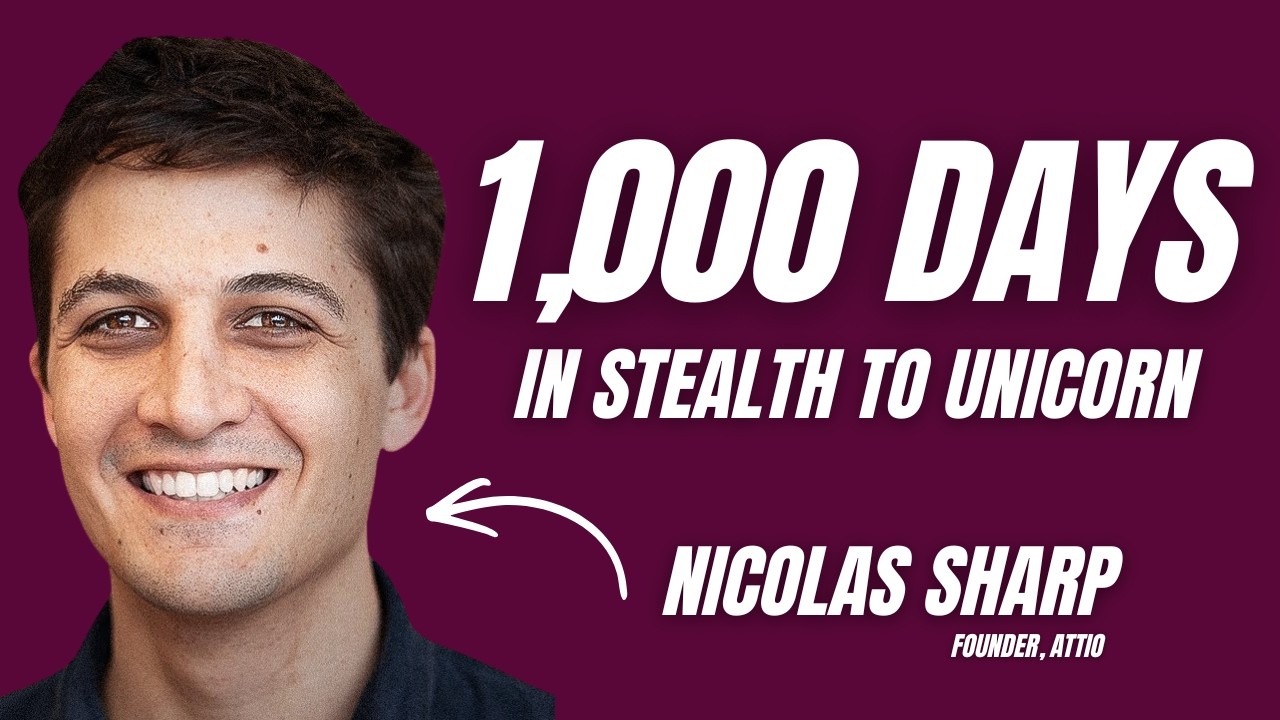
We Ignored Silicon Valley Advice for 3 Years | Nicolas Sharp (Attio)
Apr 30, 2026 · 57:49
Nicolas Sharp, co-founder of Attio, explains why the CRM startup spent 1,000 days building in stealth—a deliberate counter to the 'ship fast' philosophy he learned from a previous venture—and how that architectural investment now powers Attio's AI-native platform. He argues that the half-life of product-market fit has collapsed, forcing companies to simultaneously iterate and scale, and that Attio's high-resolution data pipelines are critical for deploying AI agents. Sharp also details how Attio used manual waitlist onboarding to validate demand, how fundraising expectations have risen dramatically (Attio raised $52M at Series B with accelerating growth), and why Europe is having a breakout moment as an AI hub, citing talent from DeepMind and Palantir as catalysts.
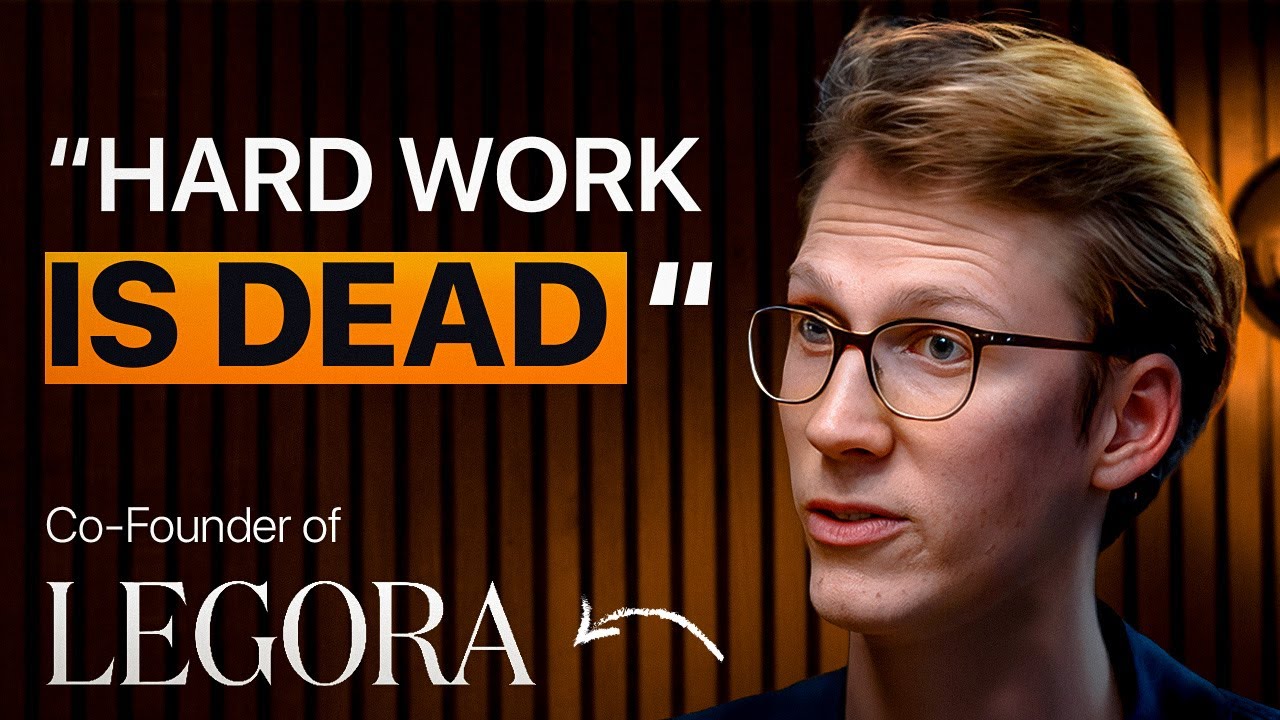
He Built A $1.8B AI Company With No Experience | Max Junestrand
Dec 14, 2025 · 52:02
Max Junestrand, CEO of legal AI company Legora, explains how AI is rewiring the legal profession, arguing that not building in AI is the biggest career risk. Legora, which went through YC W25 and has raised $260M, doubles ARR every quarter by embedding with law firms to solve real problems. Junestrand details how AI adds a fourth step to the lawyer career ladder—junior associate, senior associate, partner, AI—pushing junior lawyers to focus on intelligence and client skills earlier. He describes Legora's shift from chat to large-scale document review and Word-native drafting, and predicts a move from billable hours to outcome-based pricing as AI automates more work. Junestrand also shares his fundraising approach: build a great business and investors come to you, with Legora's Series B closing in a week and Series C in a week and a half.

This Is HOW Newsletters Can Make MILLIONS
Sep 14, 2025 · 1:02:25
Tyler Denk, co-founder of newsletter platform Beehiiv and writer of Big Desk Energy, reveals how Morning Brew's conversational tone and email-first strategy built a $75 million acquisition, then how he applied that experience to create Beehiiv as a 'Morning Brew in a box' for creators and businesses. He explains that email distribution wins because platforms like Facebook and Google cut traffic 40-50% via algorithm changes and AI summaries, while newsletters let creators own their audience and monetize through ads, subscriptions, and affiliates. Denk shares Beehiiv’s early days: 150 of 400 signups from a single tweet, a $99 all-inclusive plan that was a no-brainer, and a 'holy shit' moment when GoDaddy shut down all user websites during his bachelor party. He argues that newsletter M&A will return as companies like HubSpot acquire distribution to their ICP, and predicts waves in hard tech (robotics, energy) and preventative health—citing 50% less alcohol use among teens and the rise of wellness clubs—driven by founders needing peak mental performance to build billion-dollar companies.
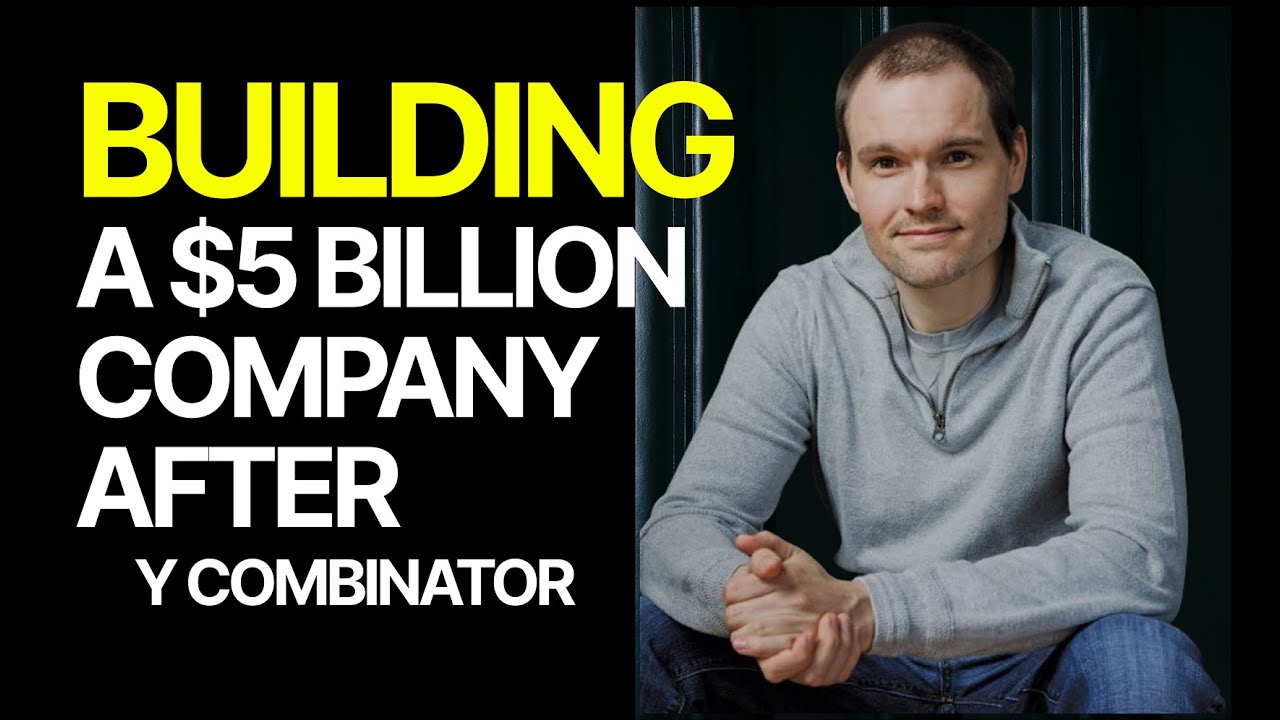
The Founding Story Of Zapier (Wade Foster)
Jul 24, 2025 · 51:33
Wade Foster, co-founder of Zapier, recounts the company's 2011 founding as an integration tool born from a forum thread and bootstrapped to scale without raising beyond $1.3 million. He explains how early growth came from answering forum posts with a prototype that converted at 50% despite being poorly designed, and how the company maintained a 'don't hire till it hurts' philosophy. Foster details the decision to avoid VC because customer acquisition costs were low and the business was profitable within a year, achieving breakeven with only tiny monthly losses. He shares two Paul Graham lessons from Y Combinator: focus only on writing code and talking to customers, and target 10% week-over-week growth, which the company sustained for years. On AI, Foster notes that AI is Zapier's fastest-growing category at nearly 300% year-over-year, and the company now offers agents built by non-technical users through natural-language workflows. He argues that seat-based pricing is dying and predicts a shift to usage-based models, while identifying the biggest AI opportunity in legacy industries like healthcare that work with unstructured data.
Powered by PodHood