
30 of 53 episodes
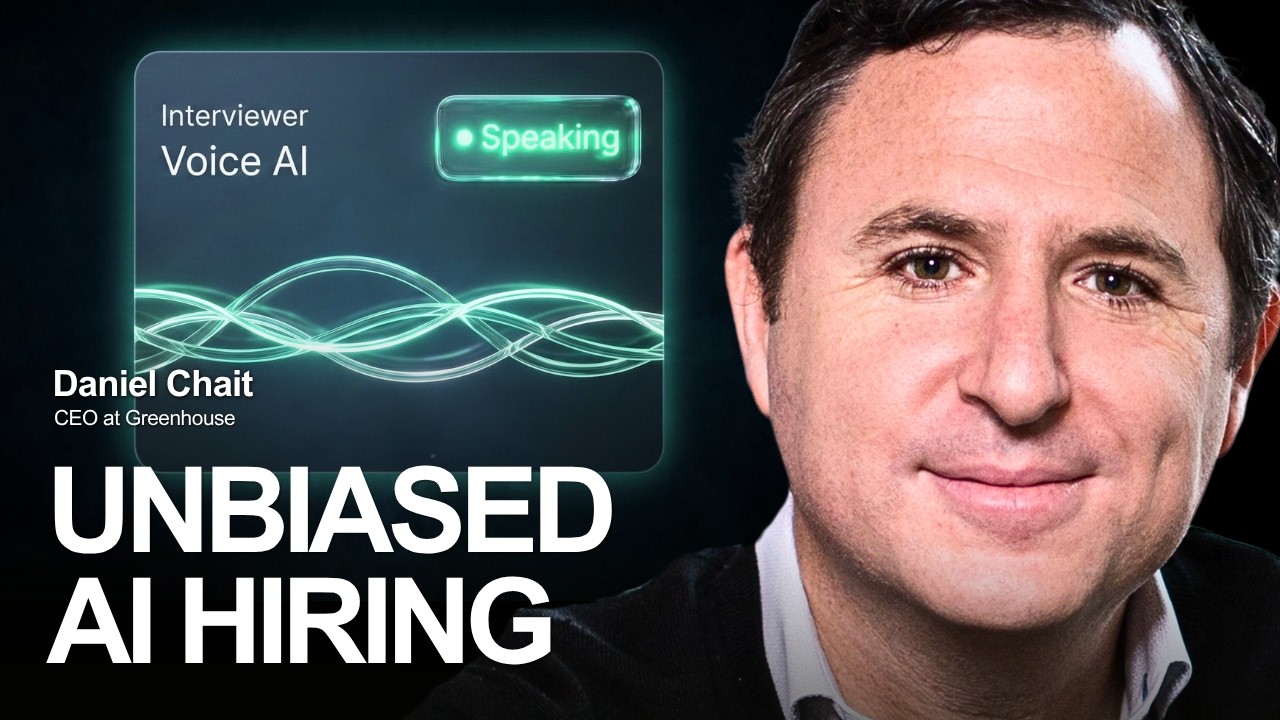
The Strategy to Eliminate Bias in Job Interviews | Greenhouse CEO Daniel Chait
Daniel Chait, co-founder and CEO of Greenhouse, argues AI has created a hiring market where neither side is happy, as auto-applied applications flood pipelines and AI filters tighten in a 'doom loop.' He says 1 to 1.5% of applicants hard-fail ID checks, recounts North Korean operatives infiltrating companies, and describes Greenhouse's 'Swiss cheese' security layers. Greenhouse's My Dream Job feature converts applicants to hires at five times the usual rate, and an AI-led first interview can eliminate the 50 percentage point racial bias gap from 2003 resume studies while saving six days per hire. He contends durable skills beat technical ones, Greenhouse must become Netflix rather than Blockbuster under its new mission to make hiring work for everyone, and companies will hire AI agents.Oct 7, 2026 · 1:08:26 · 227 views
Fireworks CEO: AI Startups Are Scaling Into Bankruptcy (And How to Fix It)
Lin Qiao, co-founder and CEO of Fireworks AI, argues AI companies are scaling into bankruptcy because product-market fit no longer means a durable business, and that specialized intelligence built on private data cuts costs five to ten times. She explains product is no longer a moat now coding agents make it easy to copy, making accumulated customer data the real moat. Lin shares her framework for owning intelligence: invest 10-20% of AI spend in training to cut total cost of ownership four to eight times. She traces Fireworks' growth from Cursor at $2M ARR to 40 trillion tokens a day, while doubling from 150 to 300 people each quarter with seven co-founders. She also recounts lessons from Jensen Huang, joining Meta in 2015 to learn, and Fireworks' zero data retention policy.Sep 27, 2026 · 57:46 · 3.4K views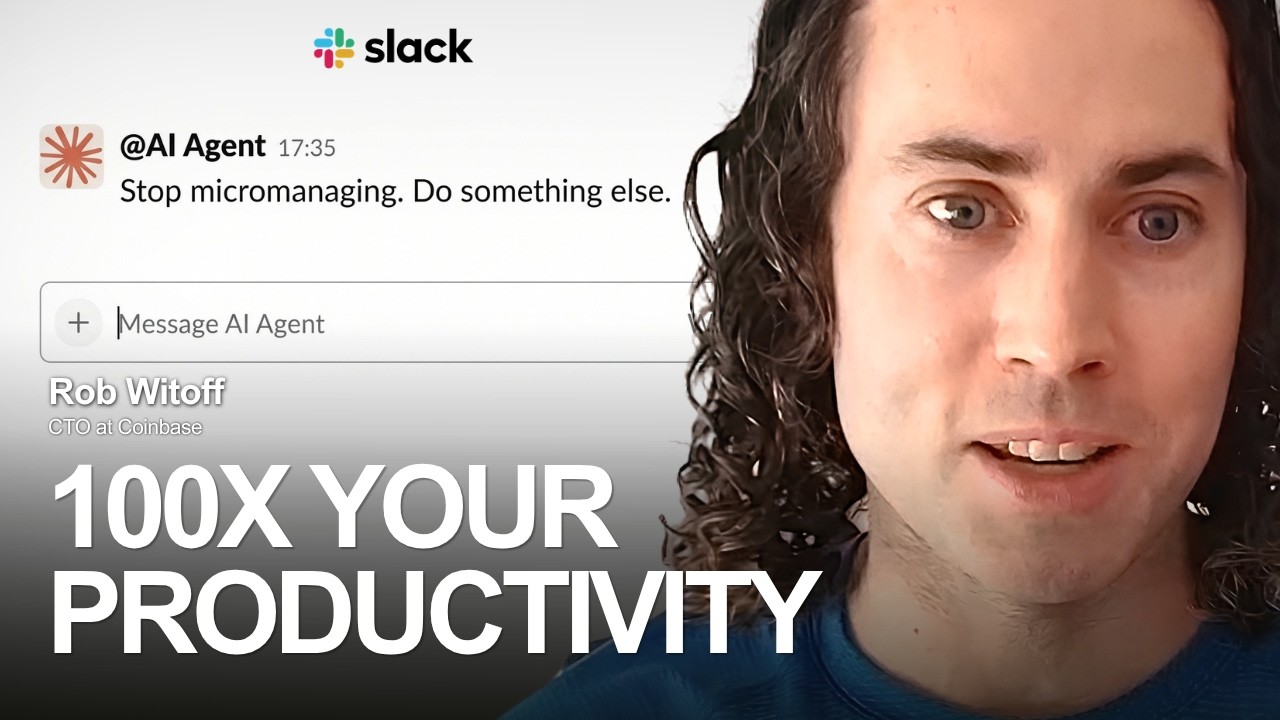
Coinbase CTO: The Strategy to Achieve 99% AI Written Code
Coinbase CTO Rob Witoff says agents now write 98-99% of Coinbase's code, with engineers supervising 3-10 agents each and producing 100x the code of a year ago. He explains how engineers moved from writing code by hand to supervising agents and loops through Coinbase's internal CB agent platform and 'Coinbase brain.' His custom 'spicy feedback' agent sends every employee a Friday 9 a.m. assessment of their Slack and meetings, built on GPT-5.6 and Claude 4.8+, giving bigger productivity gains than models in product development. He also details custom compliance and security models trained on 13 years of Coinbase data and stablecoins as the killer rail for agent-to-agent payments. The episode also covers prediction markets, Coinbase's everything exchange, and flattening management layers.Sep 24, 2026 · 1:02:52 · 1.2K views
Axios CEO: How to Get Ahead of Everyone Who's Using AI
Jim VandeHei, Co-Founder and CEO of Axios and Co-Founder of Politico, argues the open web will largely die within 2 to 5 years as LLMs from OpenAI, Anthropic and Google become the main way people get information. Once everyone has Einstein-level AI, he says, unique human-created content will soar in value, benefiting creators with direct audience relationships or niche domain expertise. He predicts courts will settle LLM compensation within 1 to 4 years and reveals Axios's 'local super system,' which uses AI to automate non-journalism work and expand local news across America's roughly 10,000 cities. He credits co-founders Mike Allen and Roy Schwartz, and promotes his book Simplify, which argues we waste at least 25% of every week—2.5 years per decade—on work that never needed doing.Sep 19, 2026 · 59:24 · 2.1K views
Webflow CEO: The Playbook Behind Webflow's $4 Billion Valuation
Linda Tong, CEO of Webflow, argues that in the age of AI the hard skill is no longer building but knowing what is worth building, warning that fast building tools have flooded the web with 'internet garbage.' She explains Webflow's shift from a $4 billion website builder into an agentic marketing platform solving the 'then what' after you hit publish, with closed-loop agents like its AEO agent. Tong says AI is a technology, not a strategy: models have nailed code generation but lack taste, so Webflow partners with multiple labs and open weight models per task. She argues pricing should be metered close to value, predicts websites will go through a 'Google Maps evolution' into personalized, agent-indexed context, and says winning still means solving a real problem better than anyone.Sep 13, 2026 · 52:46 · 1.5K views
Felicis Founder: The Blueprint Behind 50+ Billion-Dollar Startups
Aydin Senkut, founder of Felicis Ventures, argues venture winners must be unconventional, crediting 50+ unicorns to outlier founders outside Silicon Valley like Shopify in Ottawa and Adyen. A former early Google employee, he recalls Larry Page saying 'no' 80% of the time and pushing 10X ideas like Gmail. He cites Felicis research: the top 1% of exits doubled in value every five years while the other 90% stagnated, making venture a needle-in-the-haystack search. He explains the 1% Founders Pledge, which funded coaching for 100+ founders, and his focus on space, defense, manufacturing and energy. He tells Ollie LPs' time-lens underwriting breaks as exits stretch, AI makes trust 10 to 100 times harder to earn, and emerging managers must prove themselves dozens of times to build a 'hit machine.'Sep 8, 2026 · 1:06:05 · 2.4K views
Bebo Co-Founder: How to Build an $850 Million Social Network
Bebo co-founder Michael Birch explains how he built Bebo into the UK's biggest website—briefly overtaking Google in traffic—and sold it to AOL for $850 million in 2008. He traces the path from Ringo.com, sold to Tickle, to Bebo's viral mechanics: an address-book importer that added a million users in nine days and quizzes that drove hundreds of thousands of signups a day. He explains selling while growth flattened against Facebook, and never meeting anyone from AOL Time Warner before the deal closed. After open-heart surgery, he and his wife opened The Battery, a San Francisco members club, and built Sonato hospitality software. Now he argues social drifted from friends to broadcast feeds, and that AI let him build Bluebell, his new messaging app, without writing code.Sep 3, 2026 · 1:08:08 · 11.4K views
Lambda Co-Founder: How to Pivot and Scale to $3 Million in 1 Year
Lambda co-founder and CTO Stephen Balaban explains how a $40,000-a-month AWS bill forced a pivot into GPU infrastructure that produced $3 million in revenue in 2017. He details Lambda's six pivots from facial recognition to workstations and says V100 GPUs from 2017 still earn money in its cloud, rebutting short sellers' 'three-year usable life' claim. He stepped down as CEO after 14 years because he disliked the fundraising treadmill and wanted to focus on technology, handing the role to a telecom-industry outsider. He explains why Lambda avoided traditional VCs, argues GPUs are becoming an asset class like toll roads, credits NVIDIA and Jensen Huang for the partnership, and predicts multiple AI models will survive because the market lacks network effects.Aug 26, 2026 · 50:50 · 31.1K views
Superhuman CEO: The Strategy to Turn Standalone Apps Into a $13 Billion Suite
Shishir Mehrotra, CEO of Superhuman—now bundling Superhuman Mail, Grammarly, Coda (as Superhuman Docs), and Superhuman Go—explains how he built a $13 billion suite by overturning conventional wisdom on bundling. He describes meeting Rahul Vora at a Hawaii conference, rebranding 16-year-old Grammarly under the Superhuman name, and lessons from Reid Hoffman about people-first, long-term building. On the 'SaaS apocalypse,' he argues AI agents are new teammates that increase the need for coordination tools like CRMs, while pricing shifts from per-seat to usage because virtual employees don't fill out W-2s. He details his inbox-zero system using Superhuman Mail's 'splits,' and advises founders to build boards as 'weird teams' with soft connection and non-jeopardy feedback.Aug 20, 2026 · 1:07:27 · 14.1K views
Saul Klein: Europe Is Quietly Building the New Silicon Valley
Saul Klein, Phoenix Court co-founder, argues that Europe—London especially—is quietly becoming the world's next Silicon Valley, calling the UK the third-biggest innovation economy after the US and China. He recounts building LoveFilm from Netflix-like DVD rental into a £100M+ revenue business via partnerships with Tesco, ITV, and Odeon, and joining Skype as it grew 400,000 users a day through network effects. Klein says founders should not blindly go to the US, capital is a commodity, and most of the world's 20,000 VCs add little beyond money; only 28 have backed 11+ companies to $100M revenue at seed. He details Phoenix Court's structure: a company, carry for every employee, and a foundation as 30% shareholder; he names London, Paris, Berlin, Stockholm, and Amsterdam as leading hubs.Aug 19, 2026 · 57:23 · 14.4K views
Xero CEO: The Strategy to Achieve 31% Revenue Growth in 12 Months
Sukhinder Singh Cassidy, CEO of Xero, explains how the cloud accounting platform reached $2.7 billion in revenue, 31% growth, and 5 million customers by cracking the US through the Milio acquisition, building product from the US, and narrowing focus to a "US unicorn" number. She details why the US took 20 years—Intuit's entrenched home-market advantage and the need for local engineers—and why she treats "respected vs. liked" as a false choice, backing layoffs with data and speed. On AI, she argues thin application wrappers can't replicate Xero's tens of thousands of edge cases, regulatory connections, payment rails, and trusted data across 180 countries, making infrastructure the real moat. She also answers whether accountants stay relevant by pointing to Client Advisory Services, and describes the customer spectrum from AI-native builders to those needing basic AI chat support.Aug 16, 2026 · 52:18 · 2.8K views
Canva Co-Founder: AI Is Useless Without This 1 Skill
Cameron Adams, co-founder of Canva—now used by 250 million people monthly—argues that taste, not AI, is the new differentiator for creators. Adams describes Canva's founding story, where they delayed launch to polish the user experience, turning early social media managers into fanatical ambassadors. He explains that AI enables exploring ideas at scale, but the key skill is having the judgment to choose the right option and respond quickly to trends. Adams details Canva's AI evolution from text-to-image in 2022 to now solving end-to-end workflows like marketing campaigns. He also shares insights on co-founder dynamics, noting that Mel and Cliff excel at recognizing moments of change and rallying around a vision. The episode covers creators' need for taste, responsiveness, and managing multiple AI tools to stay relevant.Jul 29, 2026 · 57:30 · 63K views
a16z Partner: Hollywood Is Secretly Replacing Films With AI
Justine Moore, a16z partner and early backer of ElevenLabs, explains why AI microdramas — short, vertical soap operas — are becoming the fastest-growing entertainment format, with China's microdrama market now larger than its domestic box office. She argues model quality has reached 90-95% of filming, making it cheaper and faster, and professional storytellers are now using it to create compelling narratives. Amazon and Netflix have announced programs for fully AI-generated animations. ElevenLabs, which she backed at Series A, has crossed $500M in ARR. She highlights consumer agents like Town that automate tasks such as warm intros and expense forwarding, and sees the biggest opportunity in serving less technically sophisticated users and vertical industries like marketing and architecture.Jul 23, 2026 · 50:27 · 1.3K views
$1M to $100M ARR: What It ACTUALLY Takes to Scale
Maor Shlomo, founder of Base44, and Mark Tluszcz, Wix chairman, reveal how Base44 grew from a solo side project to $1M revenue in three weeks and $150M ARR within a year of Wix's 2025 acquisition, arguing that owning the full tech stack—including a custom AI model—is essential for vibe coding platforms. They explain Base44's origin as a tool for non-technical users to build custom software, the decision to stay bootstrapped until partnering with Wix, and the launch of their own open-source-derived LLM (Base One) to reduce costs and improve product decisions. The episode covers why they rejected reliance on third-party models, how they plan to update the model daily via reinforcement learning, and their vision for adding distribution and marketing AI co-pilots. They also share the chaotic early days, including a false hack scare during a family wedding, and predict that vibe coding will shift from building to ideation and enterprise adoption of internal tools.Jul 21, 2026 · 56:32 · 11.3K views
Reid Hoffman, LinkedIn Founder: 99% of People Are Using AI Wrong
Reid Hoffman, LinkedIn co-founder, argues most people underutilize AI by treating it as a search engine rather than an agentic workforce, predicting a shift where humans become managers of AI agent teams. He explains that Blitzscaling today means using AI to rapidly build and discard prototypes, while distribution remains a critical moat for startups. Hoffman warns that negative AI perception in the US and Europe risks ceding leadership to Asia, which embraces the cognitive Industrial Revolution. He highlights the importance of taste and judgment as skills that AI amplifies rather than replaces, and contrasts Anthropic's enterprise focus with OpenAI's consumer strength. Drawing from his decade on Microsoft's board, he shares Satya Nadella's lessons on rebuilding culture, corporate partnerships, and treating AI agents as employees that work for the company. Hoffman also spotlights applications in drug discovery (Manus AI) and personalized AI to maintain human connections.Jul 19, 2026 · 1:00:42 · 3.3K views
Mark Manson: AI is a Better Writer Than You But Here’s What it Can’t Replace
Mark Manson, author of *The Subtle Art of Not Giving a F*ck* (20 million copies, 70+ languages), argues AI will render most human self-help obsolete because it's all language, and he's building an AI app called Purpose. He claims nonfiction book sales are down 20–30% due to AI, not podcasts, and that AI will write as well as him but cannot replace his unique blend of traits. Manson shares how he uses AI for research and business coaching, and outlines an AI-proof nonfiction book requires novel concepts, creative teaching, and trust-based verticals like dating and business. He reflects on how his book's message has shifted over a decade, noting people now over-invest in identities. His advice: find the 0.1% edge case where your specific experiences overlap, because that's what AI cannot replicate.Jul 16, 2026 · 44:11 · 6.7K views
The Eventbrite Story | Julia & Kevin Hartz
Julia and Kevin Hartz, the husband-wife co-founders of Eventbrite, recount building the world's second-largest events marketplace from a windowless phone closet with dog beds for naps, bootstrapping until product market fit emerged from tech meetups and spread organically across categories. They describe Kevin handing the CEO reins to Julia in 2016 after 10 years, the challenging integration of Tickerfly after its acquisition, and the COVID moment when revenue went negative within 14 days, prompting rapid refunds and credits that saved the company. The Hartzes also explain the sale to Bending Spoons for long-term stewardship, Kevin's $450M third fund at A* Star capital, and their joint venture Sauron, a home security business with Atomic.Jul 5, 2026 · 49:55 · 15.4K views
This Company Is Reinventing Venture Capital | Ben Miller CEO at Fundrise
Ben Miller, CEO of Fundrise, recounts how the 2008 crisis inspired him to democratize private markets, first through real estate and later venture capital (launched 2022), where they waited 12 months to deploy, investing in Vanta. He contrasts venture—regretting missed opportunities—with real estate—regretting bad deals—and argues that venture value-add is mostly overstated; team builds success. On AI, he says Anthropic is eating the application layer, making it hard for all but top labs, and predicts Mythos will unlock consumer apps; he notes upcoming IPOs of AI labs and SpaceX will reallocate $10 trillion, starving other sectors. He is bullish on longevity through his investment in Loyal, a dog longevity drug company, and sees human longevity within a decade. His admired AI leader is Dario Amodei for genuine concern about risks, and his personal trait is willingness to suffer.Jun 28, 2026 · 50:44 · 5K views
Why We Sold To Grammarly | Rahul Vohra
Rahul Vohra, founder of Superhuman and now CEO of Superhuman Group after the company's acquisition by Grammarly, argues that email remains the most enduring layer of work identity and that AI will radically transform the inbox experience while distribution and taste-driven focus are the lasting moats in an era of near-zero software costs. He explains that email addresses are owned by companies and serve as the root identity and authentication unit, with professionals spending 3 billion hours daily on email. Voice features like Right With Voice on mobile now drive 30% of usage gains, and the 'Sent via Superhuman' signature still generates 20% of site traffic. The acquisition story reveals that Grammarly independently chose the Superhuman name via a branding agency, leading to the rare rebrand of the acquirer. Superhuman Group operates as a multi-product bundle ($15/$30 per month) spanning email, documents (Coder), writing agents (Grammarly), and proactive AI (Superhuman Go), with priorities on M&A to fill missing categories like chat. Vohra also angel-invests via Todd and Rahul Capital, backing companies like Loyal (which received FDA efficacy approval for a dog lifespan drug) and…Jun 21, 2026 · 1:01:18 · 6.7K views
Replit's President & Head of AI | Michele Catasta
Replit's President Michele Catasta explains how the company evolved from a 15-year-old open source side project to powering 85% of Fortune 500 by launching the first vibe coding agent in 2024, before the term existed. He describes the initial rough launch that attracted candid feedback, the scramble to build an enterprise sales team when IT departments knocked, and the belief that the coding problem is nearly solved—shifting focus to integrations. Catasta argues that technical moats are less important than execution moats built from a decade of battle scars and user trust. He predicts 2026 will be the year of 'agent managers,' where every role involves managing multiple AI agents rather than single-threaded work. The Visa partnership exemplifies Replit's strategy of providing reliable building blocks for monetization, allowing vibe coders to add payments with a single prompt.Jun 16, 2026 · 49:58 · 11.9K views
Inside Mercury's Founding Story | Co-Founder & CEO Immad Akhund
Immad Akhund, co-founder and CEO of Mercury, explains how the startup bank captured one in three U.S. startups by launching with product-market fit from day one—a million-dollar deposit arrived within four days from a stranger—and why legacy banks never stood a chance due to their focus on loans, expensive branch structures, and IT rather than engineering teams. Mercury raised $200M at a $5.2B valuation without needing the money, driven by 2.5x growth in Q1 2024 from AI-fueled entrepreneurship. Akhund details building trust as a moat, using small teams and Amazon's working-backwards process to launch AI features like Mercury Insights and Mercury Command, which let users run banking tasks inside AI tools. He dropped all one-on-ones after learning from Jensen Huang's 60 direct reports, favors optimistic curiosity, and angel-invests 250K checks in contrarian areas like space and deep tech.Jun 9, 2026 · 50:11 · 1.6K views
Inside Gusto's Founding Story | Co-Founder & CTO Eddie Kim
Eddie Kim, co-founder and CTO of Gusto, reveals how the company grew from a 2012 YC startup called ZenPayroll to $1B in annual revenue and 500,000 customers by cracking the small business market against investor skepticism. He credits the 15-year co-founder relationship with Josh Reeves and Tomer London to shared values and radical directness, arguing that packaging feedback undermines trust. Kim describes building Gusto Co-Founder, an AI agent that automates back-office tasks via chat, with a team of five in eight weeks using Claude Code, embodying how the distinction between engineer and designer disappears. He calls the blank canvas problem AI's main barrier to mainstream adoption and predicts solopreneurs will thrive as AI enables anyone to become a builder.Jun 6, 2026 · 54:31 · 3K views
We Had to Reimagine Nextdoor | CEO & Co-Founder Nirav Tolia
Nirav Tolia, CEO and co-founder of Nextdoor, explains the company's multi-year turnaround from treading water to 14% revenue growth and 22 million weekly active users, and argues that the future lies in an AI-enabled 'age of human connection' where technology amplifies real-world community rather than replacing it. He recounts the crucible moment when a board meeting in May 2018 led to his return as CEO after a five-year absence, and how investor Bill Gurley's recitation of Rudyard Kipling's 'If' spurred him to persevere. Tolia emphasizes that Nextdoor's requirement of real names and verified addresses, built from the start, gives it a trust advantage in an AI-dominated era. He describes the importance of co-founders like Sarah Leary, with whom he has worked for 27 years, and shares specific data: one in three U.S. households are on Nextdoor, with an aspiration to reach three of three. The episode also covers his brief stint as a Shark Tank shark, the opening of a new Dallas office, and a hybrid work philosophy that prioritizes both in-person energy and remote flexibility.Jun 3, 2026 · 57:02 · 4.2K views
5 Grand Slam Champion Maria Sharapova: Tennis Icon | Entrepreneur | Investor | New Media Creator
Maria Sharapova, five-time Grand Slam champion, reflects on her tennis career, emphasizing that most preparation happens when nobody's watching and that commitment to quality defined her proudest moments. She discusses the challenge of balancing fierce competition with personal boundaries, the business of sport and building a team, and how a shoulder injury in her early 20s first made her plan for a second act. Sharapova describes reinventing herself after retirement by taking a break and applying athletic lessons to entrepreneurship and her podcast 'Pretty Tough,' which explores the duality of grit and vulnerability. She shares her take on AI, noting its positive uses in sports like IBM's Wimbledon predictions and automated video analysis, but values human connection in media. In rapid-fire questions, she names Monica Seles and Steffi Graf as admired icons, Serena Williams as both the toughest opponent and a close friend who introduced her into the Tennis Hall of Fame, and says what makes her tough is the ability to say no.May 20, 2026 · 52:29 · 48.9K views
How Many $10 Billion Startups Will There Be? | Eric Hippeau
Eric Hippeau, co-founder of Lerer Hippeau, argues that while AI is transforming tech faster than ever, startups must avoid being mere wrappers around foundational models, as they can be instantly disrupted. He explains that physical AI, combining hardware and AI in areas like robotics and defense, offers more defensible opportunities. Hippeau warns that the startup market is disconnected, with inflated seed valuations assuming many will reach $10B, but historically there's no market for hundreds of such companies. He discusses healthcare, where AI-driven diagnostics could make primary care nearly free, but political will is needed to overcome entrenched systems. On media, he shares lessons from building Huffington Post—keeping stories live and separating opinion—and predicts that AI could restore trust by providing verifiable facts. Hippeau also reveals he has rebuilt his firm's workflow around Anthropic's Claude, cites AR glasses as underrated, and notes that solo GPs must build teams to succeed.May 13, 2026 · 57:21 · 1.9K views
Will AI Models Ever Compensate Creators? Tony Stubblebine (Medium CEO)
Tony Stubblebine, CEO of Medium, argues the creator economy is ending as AI slop floods public channels, but a writing renaissance is emerging where authentic expertise and private communities hold value. He details Medium's turnaround from losing $2.5M per month and $37M in debt to profitability, achieved by restructuring investor relationships and refocusing on human-written content. Stubblebine warns that AI companies like OpenAI created a 'prisoner's dilemma' by scraping content without compensation, pushing high-quality writing into walled gardens. He introduces Medium's new AI-assisted writing app TK and private blogging groups as responses to the era. The episode explores how creators must diversify revenue streams and reinvent themselves, while per-inference pricing standards like RSL slowly develop.May 6, 2026 · 53:35 · 13.7K views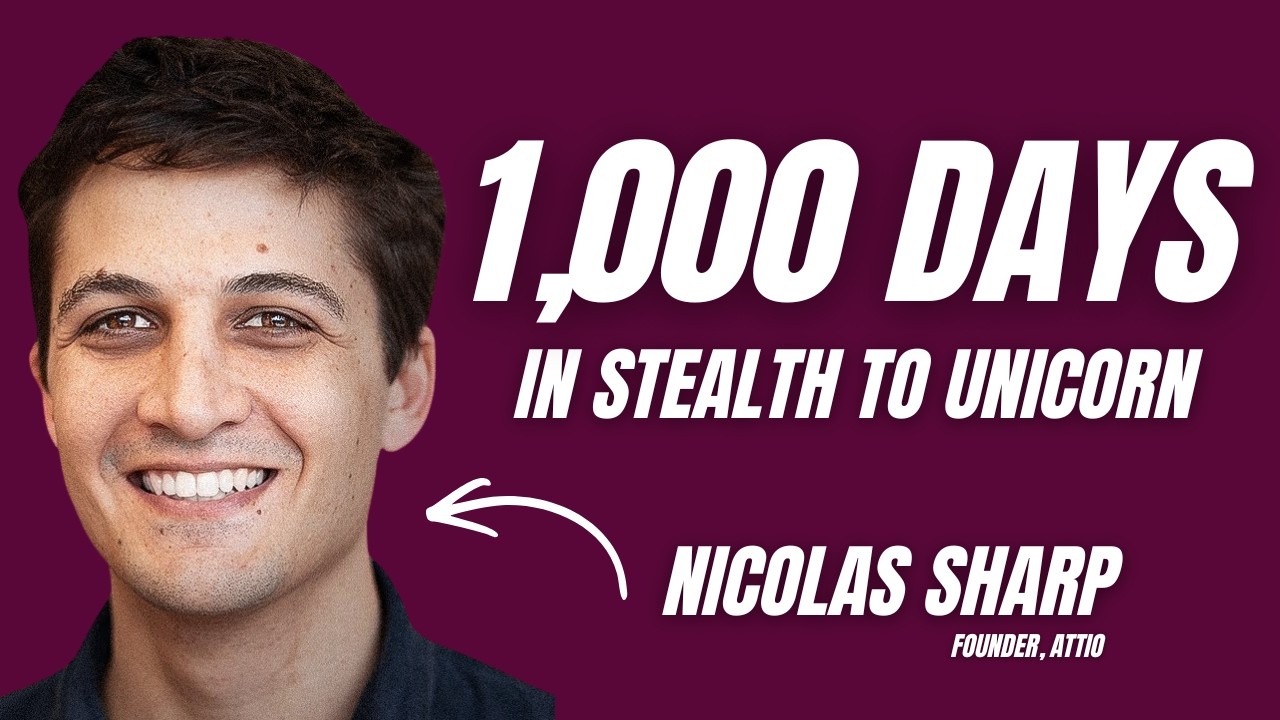
We Ignored Silicon Valley Advice for 3 Years | Nicolas Sharp (Attio)
Nicolas Sharp, co-founder of Attio, explains why the CRM startup spent 1,000 days building in stealth—a deliberate counter to the 'ship fast' philosophy he learned from a previous venture—and how that architectural investment now powers Attio's AI-native platform. He argues that the half-life of product-market fit has collapsed, forcing companies to simultaneously iterate and scale, and that Attio's high-resolution data pipelines are critical for deploying AI agents. Sharp also details how Attio used manual waitlist onboarding to validate demand, how fundraising expectations have risen dramatically (Attio raised $52M at Series B with accelerating growth), and why Europe is having a breakout moment as an AI hub, citing talent from DeepMind and Palantir as catalysts.Apr 30, 2026 · 57:49 · 10.8K views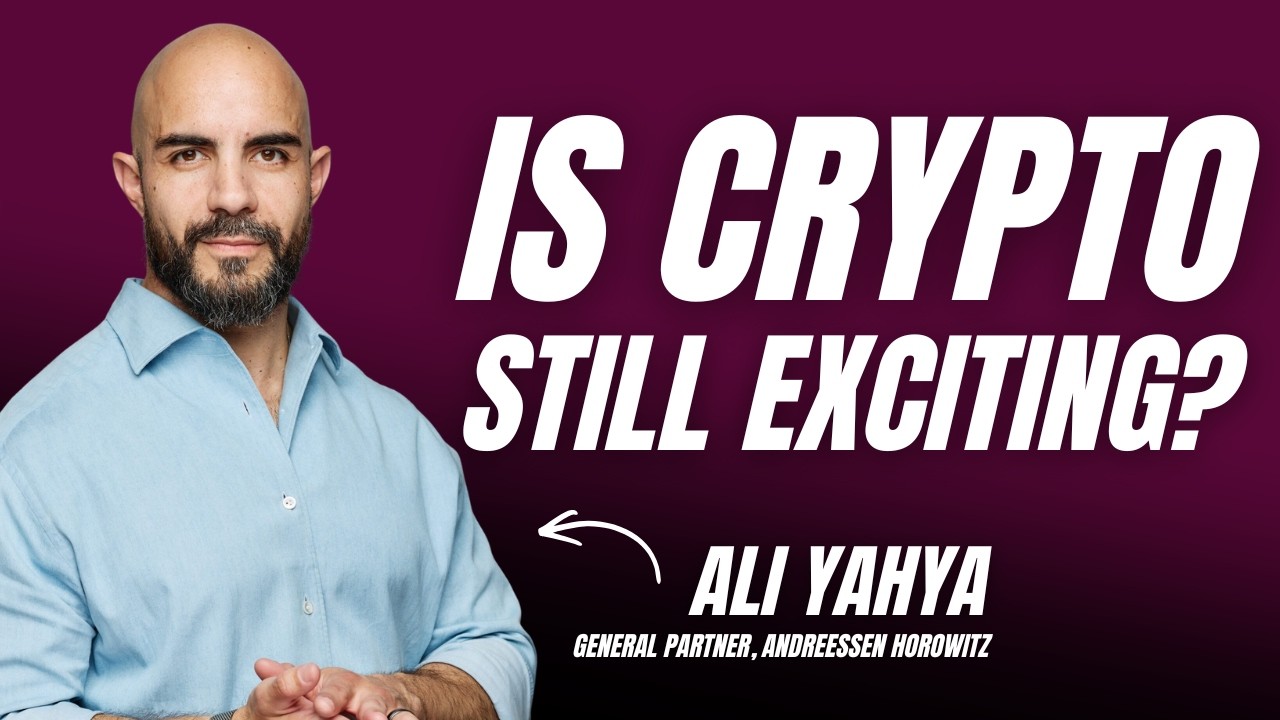
Why Andreessen Horowitz Is Still Betting Big On Crypto
Ali Yahya, general partner at Andreessen Horowitz (a16z), explains why AI and crypto are converging faster than predicted, with privacy emerging as a key defensive moat for crypto startups. He defines AGI as the point when an agent can be fully economically independent and outlines five stages of autonomous commerce, from automated payments to agent-to-agent transactions. Yahya is skeptical about AI agents trading for consumers—since everyone using ChatGPT eliminates alpha—but sees potential for professionals with proprietary data. He notes that a16z's 70-person platform team provides legal, research, and go-to-market support, and that the cost of entry has collapsed, letting founders test ideas with smaller teams before raising capital. He also highlights prediction markets, now legal in the US, as a growing category and recommends robotics as the next frontier, calling physical intelligence a 10–15 year arc offering time for newcomers to enter.Apr 22, 2026 · 50:25 · 3.7K views
Students Will No Longer Be Taught By Teachers | Joleen Liang
Joleen Liang, co-founder of Squirrel AI, explains how its LAM engine—powered by over 20 billion learning behavior data points—replaces traditional teachers by handling 100% of knowledge transfer, turning instructors into data analysts and psychologists. She details how the Chinese Double Reduction policy in 2021 slashed revenue from $300 million to zero overnight, forcing a pivot to a hardware-integrated smart tablet and leading 80% of franchisees to convert $160 million in debt into company stock. The company now expands into the US with self-study centers and plans to introduce physical AI robot teachers within five years, while arguing that generic LLMs cannot deliver truly personalized education. Liang also shares how the co-founders maintained belief through the crisis, prioritizing health and exercise, and advises founders not to underestimate their abilities.Apr 15, 2026 · 46:16 · 41.2K views
Yahoo Is Striking Back | CEO Shares The Latest
Yahoo CEO Jim Lanzone and SVP Eric Feng explain how Yahoo is striking back with AI-powered products like Scout and MyScout, leveraging its 700 million users and proprietary data to differentiate from generic chatbots. After being taken private by Apollo in 2021, Yahoo sold off non-core assets and restructured into GM-led units, cutting headcount by 50% while remaining profitable. The company owns its AI tech, using 30 years of search history and unique knowledge graphs to deliver accurate, citation-rich answers that send traffic to publishers, unlike other AI engines. They argue this approach is possible because Yahoo dominates categories like finance (#1) and sports (#2), each with 100M+ monthly users, and that AI is causing a seismic shift in search behavior (Google's lowest market share in a decade). The duo emphasizes that domain expertise now matters more than pure technical skills, and they are planning agentic features that move from information to action, such as booking trips or setting fantasy lineups, to increase user touchpoints from once a day to multiple times an hour.Apr 7, 2026 · 53:50 · 60.1K views1:08:26The Strategy to Eliminate Bias in Job Interviews | Greenhouse CEO Daniel Chait
Daniel Chait, co-founder and CEO of Greenhouse, argues AI has created a hiring market where neither side is happy, as auto-applied applications flood pipelines and AI filters tighten in a 'doom loop.' He says 1 to 1.5% of applicants hard-fail ID checks, recounts North Korean operatives infiltrating companies, and describes Greenhouse's 'Swiss cheese' security layers. Greenhouse's My Dream Job feature converts applicants to hires at five times the usual rate, and an AI-led first interview can eliminate the 50 percentage point racial bias gap from 2003 resume studies while saving six days per hire. He contends durable skills beat technical ones, Greenhouse must become Netflix rather than Blockbuster under its new mission to make hiring work for everyone, and companies will hire AI agents.
Daniel Chait, co-founder and CEO of Greenhouse, joins us to explain why AI has created a hiring market where "neither side is really happy." Greenhouse is the hiring platform trusted by more than 7,500 companies. Daniel co-founded it in 2012 after building Lab49, and he has watched job seekers and employers get stuck in what he calls the "AI doom loop," where each side uses AI to help itself and makes the whole system worse. Daniel also shares why 1 to 1.5% of applicants fail ID checks, and how North Korean operatives use the hiring process to get inside Western companies. He explains how Greenhouse's Dream Job feature converts applicants to hires at five times the usual rate, and why starting with an AI interview could remove a 50-percentage-point racial bias gap from resume screening. He closes with what it would mean for companies to one day hire AI agents alongside people. Timestamps: [00:00] Meet Daniel Chait [02:16] The state of hiring right now [04:03] Why employers get 1,000 applications in a day [05:31] The AI doom loop explained [10:31] Why AI resume filters fail [11:35] The "Jared problem": how AI amplifies bias [13:32] North Korean spies and fake candidates [16:03] 1 in 100 applicants fail ID checks [16:32] The Swiss cheese model of hiring security [20:34] How deepfake hiring rings get caught [22:30] Why Daniel is still an AI optimist [23:34] Dream Job: the feature with a 5x hire rate [26:05] How COVID, rates and ChatGPT changed hiring [29:02] Are entry-level jobs disappearing? [33:00] Is university still worth it? [35:01] Why durable skills beat technical skills [36:00] Is job hopping a red flag? [37:34] Changing business models [40:00] Staying relevant when anyone can clone software [43:03] Blockbuster or Netflix? [45:31] Greenhouse's new mission [47:30] Why AI interviews can remove racial bias [51:30] What happens to humans in hiring? [53:32] How AI interviews save 6 days per hire [55:03] From software engineers to agent managers [56:30] Could companies one day hire AI agents? [1:00:02] How Greenhouse places bets [1:03:03] A week as Daniel's chief of staff [1:04:35] Great leaders have no followers [1:05:35] Leading 700 people as CEO [1:07:02] What keeps Daniel motivated How to connect with us: Follow Ollie on LinkedIn: https://www.linkedin.com/in/ollieforsyth Follow Daniel on LinkedIn: https://www.linkedin.com/in/dhchait Visit Greenhouse: https://greenhouse.com Our Partner for this episode is Harmonic - your go-to startup database https://harmonic.ai