
Fintech & Crypto
Episodes from NEW ECONOMIES about Fintech & Crypto.
5 episodes

Inside Mercury's Founding Story | Co-Founder & CEO Immad Akhund
Jun 9, 2026 · 50:11
Immad Akhund, co-founder and CEO of Mercury, explains how the startup bank captured one in three U.S. startups by launching with product-market fit from day one—a million-dollar deposit arrived within four days from a stranger—and why legacy banks never stood a chance due to their focus on loans, expensive branch structures, and IT rather than engineering teams. Mercury raised $200M at a $5.2B valuation without needing the money, driven by 2.5x growth in Q1 2024 from AI-fueled entrepreneurship. Akhund details building trust as a moat, using small teams and Amazon's working-backwards process to launch AI features like Mercury Insights and Mercury Command, which let users run banking tasks inside AI tools. He dropped all one-on-ones after learning from Jensen Huang's 60 direct reports, favors optimistic curiosity, and angel-invests 250K checks in contrarian areas like space and deep tech.
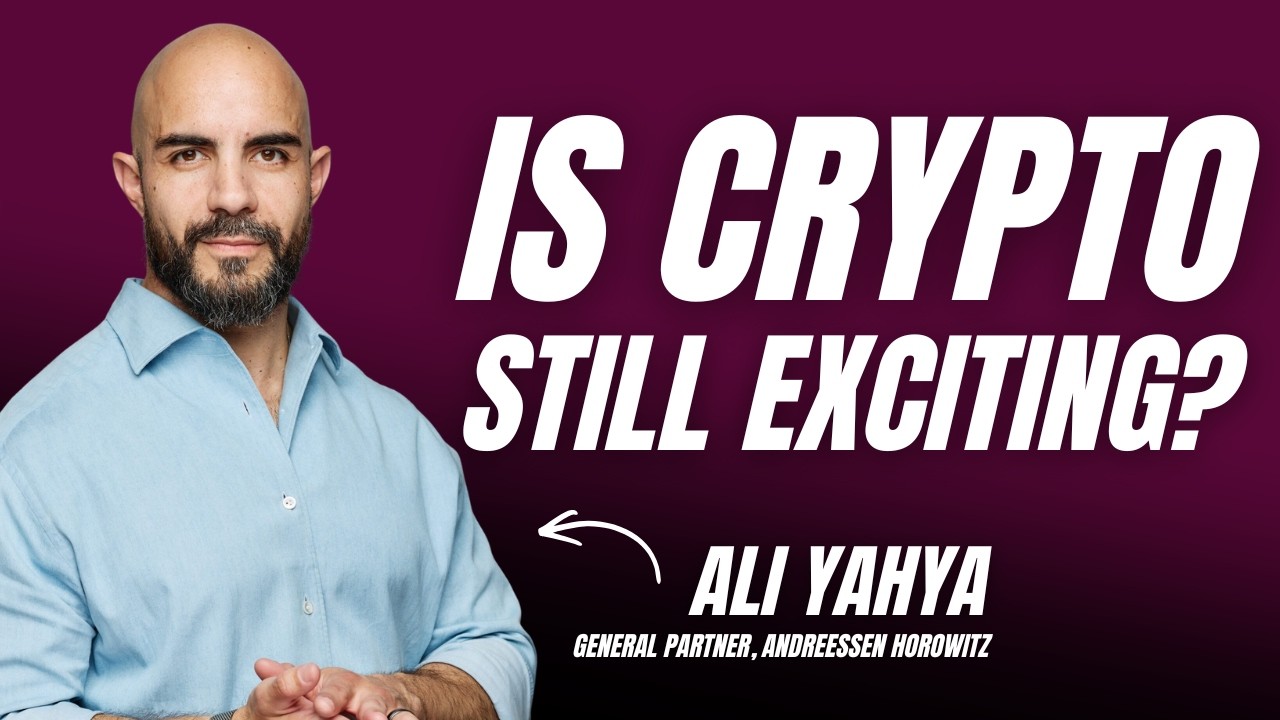
Why Andreessen Horowitz Is Still Betting Big On Crypto
Apr 22, 2026 · 50:25
Ali Yahya, general partner at Andreessen Horowitz (a16z), explains why AI and crypto are converging faster than predicted, with privacy emerging as a key defensive moat for crypto startups. He defines AGI as the point when an agent can be fully economically independent and outlines five stages of autonomous commerce, from automated payments to agent-to-agent transactions. Yahya is skeptical about AI agents trading for consumers—since everyone using ChatGPT eliminates alpha—but sees potential for professionals with proprietary data. He notes that a16z's 70-person platform team provides legal, research, and go-to-market support, and that the cost of entry has collapsed, letting founders test ideas with smaller teams before raising capital. He also highlights prediction markets, now legal in the US, as a growing category and recommends robotics as the next frontier, calling physical intelligence a 10–15 year arc offering time for newcomers to enter.
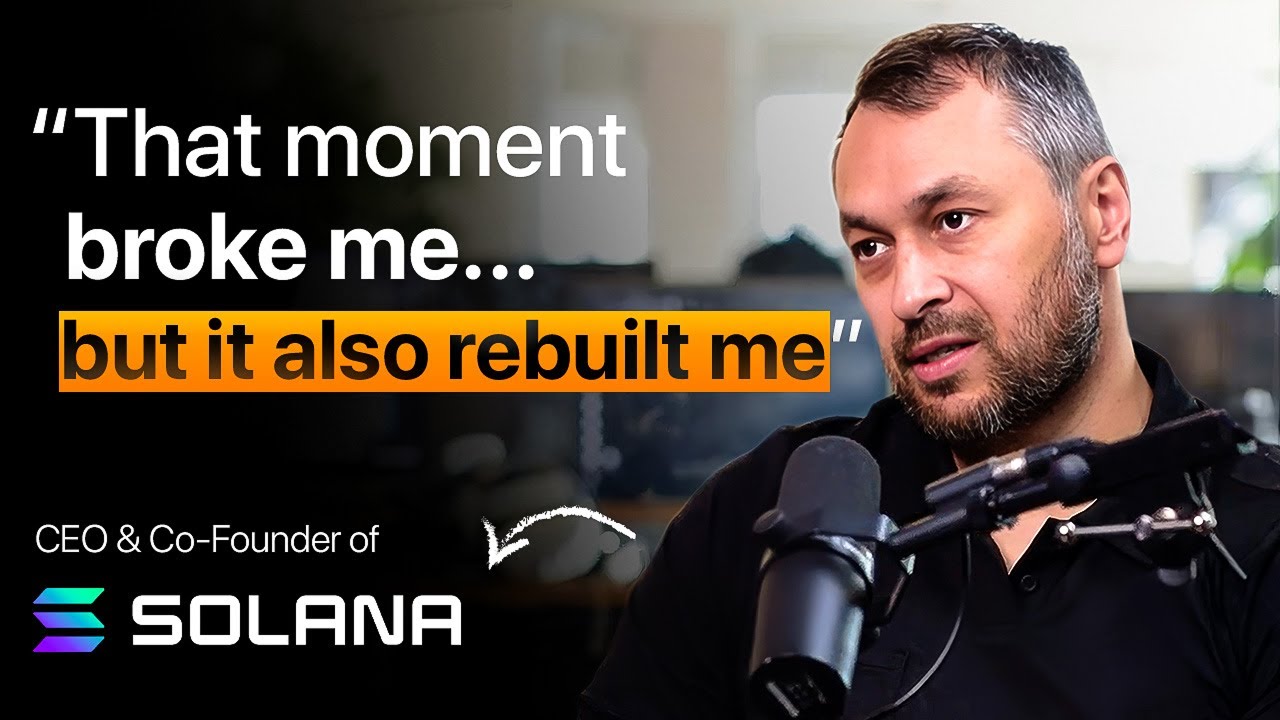
OUT NOW: Solana's Founding Story | Anatoly Yakovenko
Nov 10, 2025 · 1:06
Anatoly Yakovenko, co-founder and CEO of Solana, tells the story of how his eureka moment—a calculation showing Solana could achieve 1,000 to 10,000 times more throughput than Ethereum or Bitcoin—led to a manic four days and eventually to a blockchain that processes in a single month as many transactions as Ethereum does in its lifetime. He details the brutal fundraising process, requiring 1,000 meetings to secure the first major check, and the near-catastrophic moment during Solana's biggest conference (1,600 developers, sold out) when FTX collapsed on the flight back, threatening the entire ecosystem. The episode explores Anatoly's vision for decentralized finance beyond speculation and the challenges of building a truly open on-chain financial system.
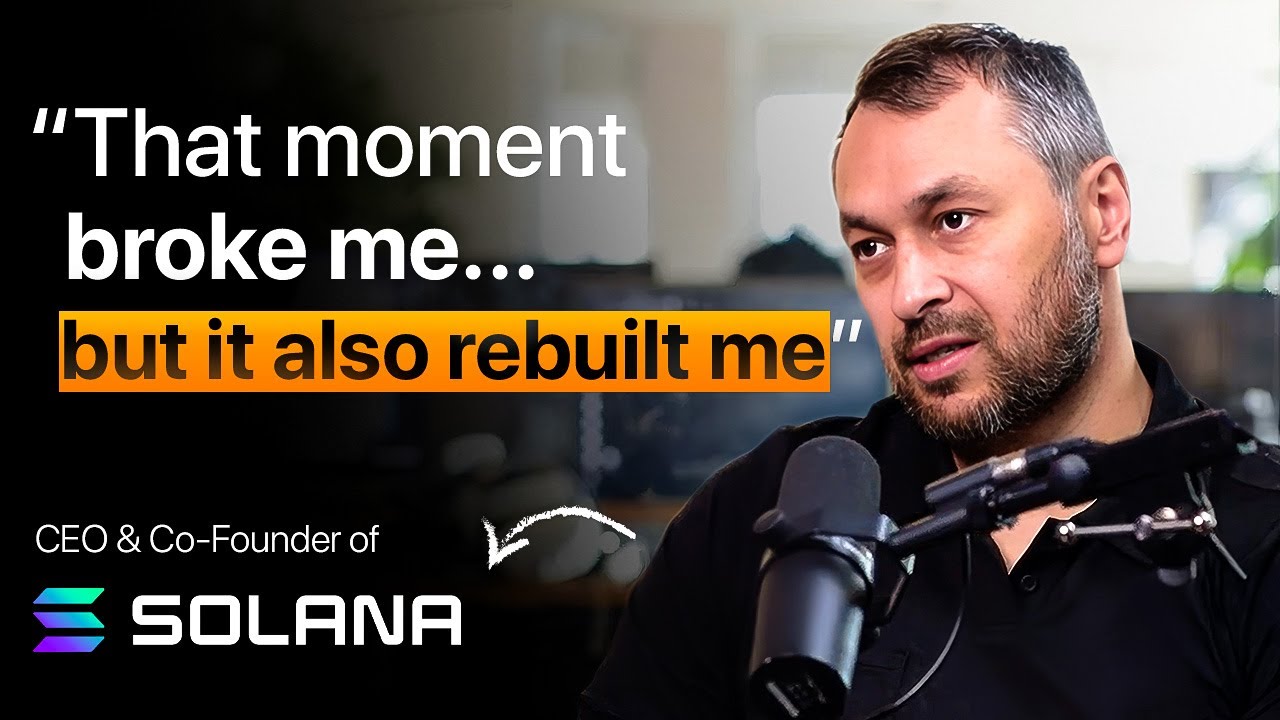
How Solana Survived When Most Other Coins Fell | Anatoly Yakovenko Story
Nov 9, 2025 · 54:31
Anatoly Yakovenko, co-founder and CEO of Solana, recounts how a eureka moment after two coffees and a beer led to encoding passage of time as a data structure, enabling 1,000 to 10,000 times more throughput than Ethereum or Bitcoin. He describes the grueling process of taking 1,000 meetings to secure funding, surviving the FTX collapse that wiped 97% of Solana's value, and how ecosystem teams like Backpack turned anger into momentum. Yakovenko explains that Solana now processes in a single month as many transactions as Ethereum’s entire lifetime, at fees under 0.2 cents. His long-term vision is a single on-chain system handling payments, trading, IPOs, and global finance atomically at the speed of light, reducing costs to the physics minimum. He predicts stablecoins will drive a 10x increase in digital dollars and that on-chain IPOs could democratize capital access for founders.

Inside the $11M YC Startups That Took Over 2025
Oct 19, 2025 · 1:27:39
This episode profiles six YC Summer 25 startups: Frizzle (AI grading for math teachers, saving 10+ hours/week with 98.9% accuracy), Floot (vibe-coding tool for non-coders, 20,000 users in three months, acquired via Reddit competitor subreddits), Sagekit (chat-based automation platform replacing Zapier, building integrations at 5–10 per week, targeting solopreneurs and SMBs), April (voice AI executive assistant for email and calendar, priced at $15/month, initially launched without free trial then corrected), Cacao (dollar app for Brazil using stablecoins, moving hundreds of thousands in volume, focused on remote workers and freelancers), and Flywheel (retrofit remote control for excavators to improve safety, with two Singapore and three US customers, aiming to reduce ~1,000 annual US construction deaths). Each founder shares early mistakes—Frizzle’s underestimating K-12 sales cycles, Floot’s free pricing delaying feedback, April’s no-trial launch, Cacao’s need for regulatory navigation, and Flywheel’s productization challenges—and explains their go-to-market strategies.
Powered by PodHood