
Consumer & Community
Episodes from NEW ECONOMIES about Consumer & Community.
6 episodes

Bebo Co-Founder: How to Build an $850 Million Social Network
Sep 3, 2026 · 1:08:08
Bebo co-founder Michael Birch explains how he built Bebo into the UK's biggest website—briefly overtaking Google in traffic—and sold it to AOL for $850 million in 2008. He traces the path from Ringo.com, sold to Tickle, to Bebo's viral mechanics: an address-book importer that added a million users in nine days and quizzes that drove hundreds of thousands of signups a day. He explains selling while growth flattened against Facebook, and never meeting anyone from AOL Time Warner before the deal closed. After open-heart surgery, he and his wife opened The Battery, a San Francisco members club, and built Sonato hospitality software. Now he argues social drifted from friends to broadcast feeds, and that AI let him build Bluebell, his new messaging app, without writing code.

Saul Klein: Europe Is Quietly Building the New Silicon Valley
Aug 19, 2026 · 57:23
Saul Klein, Phoenix Court co-founder, argues that Europe—London especially—is quietly becoming the world's next Silicon Valley, calling the UK the third-biggest innovation economy after the US and China. He recounts building LoveFilm from Netflix-like DVD rental into a £100M+ revenue business via partnerships with Tesco, ITV, and Odeon, and joining Skype as it grew 400,000 users a day through network effects. Klein says founders should not blindly go to the US, capital is a commodity, and most of the world's 20,000 VCs add little beyond money; only 28 have backed 11+ companies to $100M revenue at seed. He details Phoenix Court's structure: a company, carry for every employee, and a foundation as 30% shareholder; he names London, Paris, Berlin, Stockholm, and Amsterdam as leading hubs.

We Had to Reimagine Nextdoor | CEO & Co-Founder Nirav Tolia
Jun 3, 2026 · 57:02
Nirav Tolia, CEO and co-founder of Nextdoor, explains the company's multi-year turnaround from treading water to 14% revenue growth and 22 million weekly active users, and argues that the future lies in an AI-enabled 'age of human connection' where technology amplifies real-world community rather than replacing it. He recounts the crucible moment when a board meeting in May 2018 led to his return as CEO after a five-year absence, and how investor Bill Gurley's recitation of Rudyard Kipling's 'If' spurred him to persevere. Tolia emphasizes that Nextdoor's requirement of real names and verified addresses, built from the start, gives it a trust advantage in an AI-dominated era. He describes the importance of co-founders like Sarah Leary, with whom he has worked for 27 years, and shares specific data: one in three U.S. households are on Nextdoor, with an aspiration to reach three of three. The episode also covers his brief stint as a Shark Tank shark, the opening of a new Dallas office, and a hybrid work philosophy that prioritizes both in-person energy and remote flexibility.

Will AI Models Ever Compensate Creators? Tony Stubblebine (Medium CEO)
May 6, 2026 · 53:35
Tony Stubblebine, CEO of Medium, argues the creator economy is ending as AI slop floods public channels, but a writing renaissance is emerging where authentic expertise and private communities hold value. He details Medium's turnaround from losing $2.5M per month and $37M in debt to profitability, achieved by restructuring investor relationships and refocusing on human-written content. Stubblebine warns that AI companies like OpenAI created a 'prisoner's dilemma' by scraping content without compensation, pushing high-quality writing into walled gardens. He introduces Medium's new AI-assisted writing app TK and private blogging groups as responses to the era. The episode explores how creators must diversify revenue streams and reinvent themselves, while per-inference pricing standards like RSL slowly develop.

The Hidden Skill Behind Every Successful Founder | Lindsay Kaplan
Nov 30, 2025 · 37:06
Lindsay Kaplan, co-founder of Chief, explains how she and her co-founder Caroline built the women's executive network from cold emails that landed the first 200 members to a unicorn with tens of thousands on the waitlist. She details pivoting from in-person to digital in days during COVID, launching physical spaces, and the art of co-founder dynamics—emphasizing disagreement and complementary skills. Kaplan describes stepping down as operator after seven years, moving to VC at Next Wave NYC, and why she backs founders at the intersection of AI and real-world community, arguing that AI is a tool that cannot replicate in-person connection.
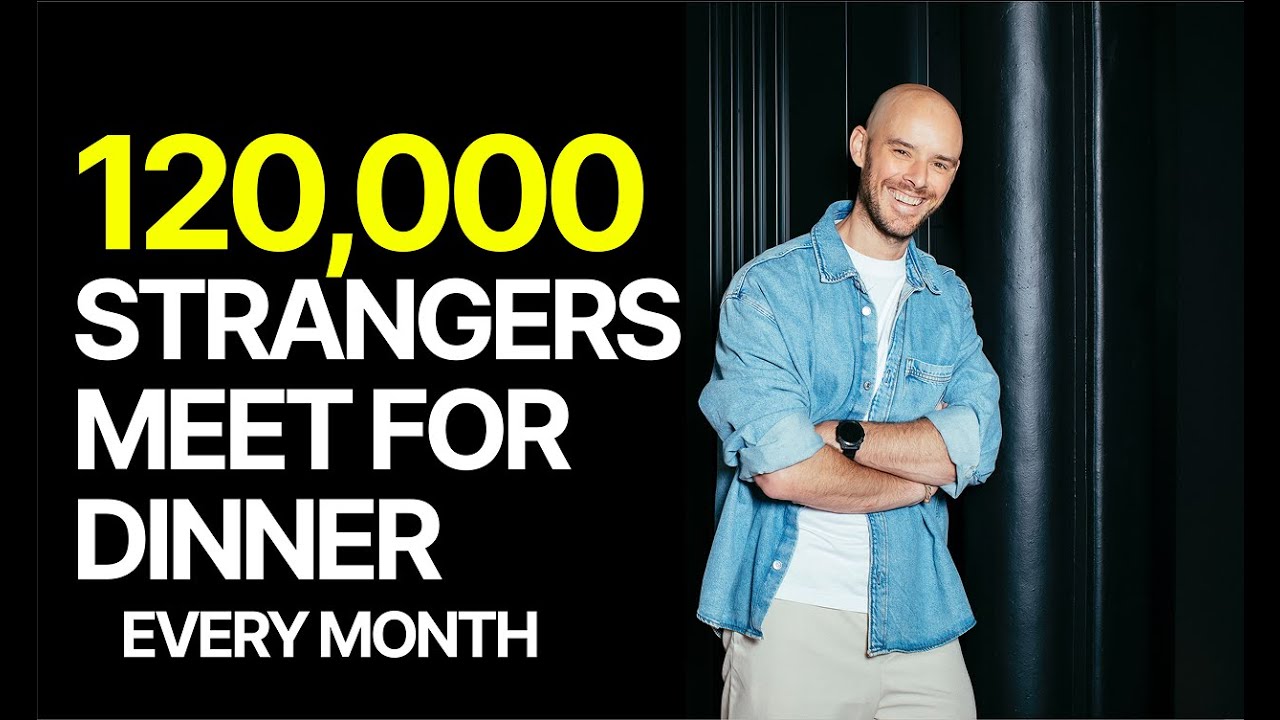
$16M Net ARR In Just Two Years (Maxime Barbier, Timeleft)
Aug 1, 2025 · 43:00
Maxime Barbier, co-founder of Timeleft, explains how his company that hosts dinners for strangers scaled from zero revenue to $16M net ARR in just two years by focusing on in-person connection amid a loneliness epidemic. After three years of failing with different concepts, Timeleft launched in May 2023 with 24 people in one city; today it serves 120,000 strangers monthly across 260 cities in 50 countries. Barbier attributes growth to performance marketing (40% of business is US) and a profitable acquisition model, avoiding 'empty calories' by ensuring users return. He details operational challenges of coordinating 30,000 dinners in 2,500 restaurants on a single Wednesday, and the expansion into new events like Thursday bar drinks and Saturday runs. Barbier also shares his views on why dating apps are declining (citing Bumble's share price drop from $62 to $6.50), arguing they create an illusion of choice and an 'Amazon Prime effect' that undermines real connection. The episode covers trends like tech as a new social frontier, friendship as the new dating, and the fall of dating apps.
Powered by PodHood