
AI Coding
Episodes from NEW ECONOMIES about AI Coding.
10 episodes
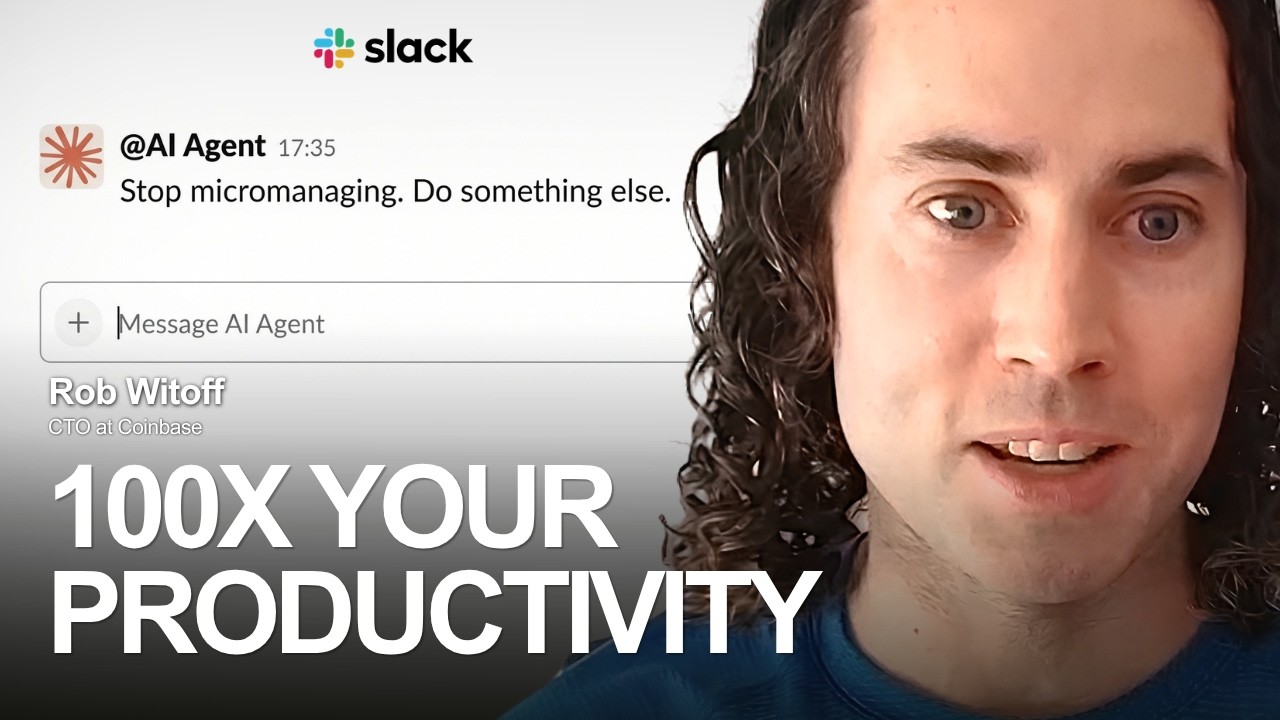
Coinbase CTO: The Strategy to Achieve 99% AI Written Code
Sep 24, 2026 · 1:02:52
Coinbase CTO Rob Witoff says agents now write 98-99% of Coinbase's code, with engineers supervising 3-10 agents each and producing 100x the code of a year ago. He explains how engineers moved from writing code by hand to supervising agents and loops through Coinbase's internal CB agent platform and 'Coinbase brain.' His custom 'spicy feedback' agent sends every employee a Friday 9 a.m. assessment of their Slack and meetings, built on GPT-5.6 and Claude 4.8+, giving bigger productivity gains than models in product development. He also details custom compliance and security models trained on 13 years of Coinbase data and stablecoins as the killer rail for agent-to-agent payments. The episode also covers prediction markets, Coinbase's everything exchange, and flattening management layers.

$1M to $100M ARR: What It ACTUALLY Takes to Scale
Jul 21, 2026 · 56:32
Maor Shlomo, founder of Base44, and Mark Tluszcz, Wix chairman, reveal how Base44 grew from a solo side project to $1M revenue in three weeks and $150M ARR within a year of Wix's 2025 acquisition, arguing that owning the full tech stack—including a custom AI model—is essential for vibe coding platforms. They explain Base44's origin as a tool for non-technical users to build custom software, the decision to stay bootstrapped until partnering with Wix, and the launch of their own open-source-derived LLM (Base One) to reduce costs and improve product decisions. The episode covers why they rejected reliance on third-party models, how they plan to update the model daily via reinforcement learning, and their vision for adding distribution and marketing AI co-pilots. They also share the chaotic early days, including a false hack scare during a family wedding, and predict that vibe coding will shift from building to ideation and enterprise adoption of internal tools.
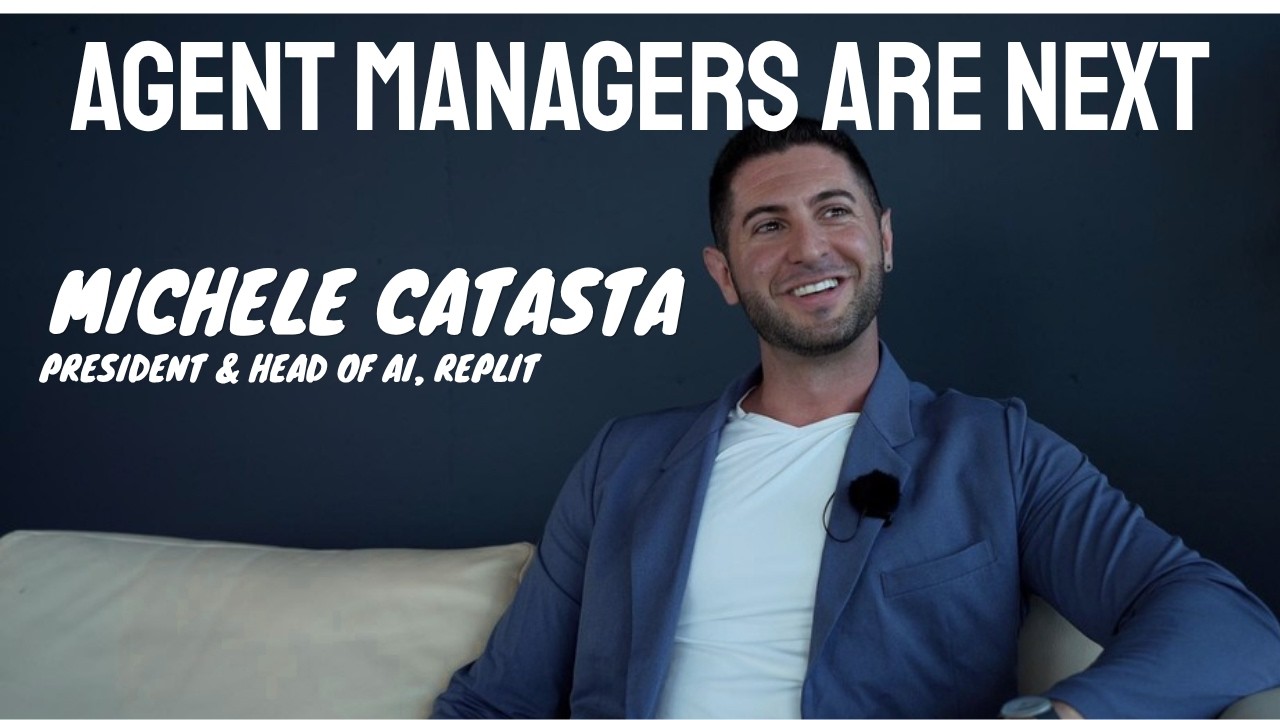
Replit's President & Head of AI | Michele Catasta
Jun 16, 2026 · 49:58
Replit's President Michele Catasta explains how the company evolved from a 15-year-old open source side project to powering 85% of Fortune 500 by launching the first vibe coding agent in 2024, before the term existed. He describes the initial rough launch that attracted candid feedback, the scramble to build an enterprise sales team when IT departments knocked, and the belief that the coding problem is nearly solved—shifting focus to integrations. Catasta argues that technical moats are less important than execution moats built from a decade of battle scars and user trust. He predicts 2026 will be the year of 'agent managers,' where every role involves managing multiple AI agents rather than single-threaded work. The Visa partnership exemplifies Replit's strategy of providing reliable building blocks for monetization, allowing vibe coders to add payments with a single prompt.

Inside Gusto's Founding Story | Co-Founder & CTO Eddie Kim
Jun 6, 2026 · 54:31
Eddie Kim, co-founder and CTO of Gusto, reveals how the company grew from a 2012 YC startup called ZenPayroll to $1B in annual revenue and 500,000 customers by cracking the small business market against investor skepticism. He credits the 15-year co-founder relationship with Josh Reeves and Tomer London to shared values and radical directness, arguing that packaging feedback undermines trust. Kim describes building Gusto Co-Founder, an AI agent that automates back-office tasks via chat, with a team of five in eight weeks using Claude Code, embodying how the distinction between engineer and designer disappears. He calls the blank canvas problem AI's main barrier to mainstream adoption and predicts solopreneurs will thrive as AI enables anyone to become a builder.

Why Hand-Typing Code Will End Your Career in 2026
Mar 2, 2026 · 49:31
Dan Shipper, co-founder and CEO of Every, argues that AI agents like OpenClaw and vibe coding—prompting apps in English—are fundamentally reshaping how companies operate, from internal workflows to product development. Every, a 20-person company running four AI-native products (Quora, Spiral, Sparkle, Monologue), treats failed software experiments as content that builds distribution, and uses a 'two-slice team' approach where each product is managed by one person. Shipper details how he reclaimed the 'founder' title for legitimacy, the four-year 'flatline' period before the AI wave hit, and why over-hiring early is 'crazy—most of the time it doesn't end well.' He advises founders to automate every internal process with AI and build for both humans and agents.

The Harsh Truth About Building a Startup in the AI Era | Anish Acharya
Nov 23, 2025 · 51:12
Anish Acharya, General Partner at a16z, argues the AI era has reopened consumer tech's biggest window since mobile, with consumers paying $200–$250 monthly for products like Gemini Ultra and ChatGPT. He warns founders against traps like thinking they're too late, noting AI code and legal will become entire industries with dozens of winners. Voice AI is an enterprise insertion point where agents already outperform humans at negotiation, while the next social platform will revolve around software creation rather than content. He dismisses the AI wrapper risk because multi-model products and fine-tuned data give startups defensibility, and advises founders to raise 24-month rounds focused on product, not marketing. Acharya also predicts 2026 will bring new distribution channels via OpenAI's Apps SDK, Apple's mini apps, and group chat discovery.

The AI Version of You Will Outperform You — Emad Mostaque
Nov 16, 2025 · 51:27
Emad Mostaque, founder of Stability AI and now Intelligent Internet, argues that within 1,000 days, AI will create digital twins that replace most cognitive jobs, but the bigger risk is cognitive colonialism—a handful of corporations controlling the AI layer closest to people. He explains why he left Stability after it reached 300 million downloads to build open, sovereign AI for healthcare, education, and government, citing a medical model that outperforms human doctors on benchmarks and runs on a laptop. Mostaque warns that graduate jobs are already disappearing, and by 2028 coding jobs as we know them will vanish, replaced by English-language AI. He advocates for universal basic AI alongside universal basic income, and announces Sage, an open-source policy engine for governments, and a ChatGPT alternative that routes through any model at cost. The episode details his vision for distributed civic AI funded via Foundation Coin, where compute goes toward helping people rather than maximizing profit.

Inside the $11M YC Startups That Took Over 2025
Oct 19, 2025 · 1:27:39
This episode profiles six YC Summer 25 startups: Frizzle (AI grading for math teachers, saving 10+ hours/week with 98.9% accuracy), Floot (vibe-coding tool for non-coders, 20,000 users in three months, acquired via Reddit competitor subreddits), Sagekit (chat-based automation platform replacing Zapier, building integrations at 5–10 per week, targeting solopreneurs and SMBs), April (voice AI executive assistant for email and calendar, priced at $15/month, initially launched without free trial then corrected), Cacao (dollar app for Brazil using stablecoins, moving hundreds of thousands in volume, focused on remote workers and freelancers), and Flywheel (retrofit remote control for excavators to improve safety, with two Singapore and three US customers, aiming to reduce ~1,000 annual US construction deaths). Each founder shares early mistakes—Frizzle’s underestimating K-12 sales cycles, Floot’s free pricing delaying feedback, April’s no-trial launch, Cacao’s need for regulatory navigation, and Flywheel’s productization challenges—and explains their go-to-market strategies.

How He Built This Full App Using ONLY 3 prompts | Colin Matthews
Oct 15, 2025 · 46:40
Colin Matthews, a vibe coding instructor, demonstrates how to build full-stack apps, convert Figma designs, and clone live websites using tools like Lovable, Bolt, Replit, Magic Patterns, and Alloy, arguing that the real challenge is distribution, not coding. He shows that bolt, Replit, and Lovable all generate similar results using the same underlying LLMs, with differences in UI and cost—Bolt costing about $5 for a virtual fitting room app. For Figma-to-code, Magic Patterns offers better code quality while Figma Make has superior visual fidelity but messy code. Website cloning via Chrome extensions like Alloy takes 5–10 minutes per page but currently lacks multi-page support. Matthews emphasizes that 90% of the work is easy, but the remaining 10% requires debugging skills, and advises aspiring builders to adopt a distribution-first approach—citing his own Wix extension that got 8,000 users with no marketing—rather than just focusing on product.

How To Actually Vibe Code
Aug 8, 2025 · 59:19
Billy Howell demonstrates how to vibe-code a directory website for barbecue restaurants using AI tools like Replit, Lovable, and V0, taking the idea from a product requirements document to a functional prototype in under an hour. He explains that niche directories can be built in a weekend, monetized through ads or affiliate partnerships, and eventually sold via platforms like MicroAcquire. Beyond directories, Howell discusses three trends: employees using AI to build and sell custom software to their employers, unlocking nascent demand as every business gains access to tailored tools; and AI receptionists for local service businesses, citing a personal experience where he didn't realize he was talking to an AI until 20 seconds into the call. He recommends starting with a specific niche (e.g., HVAC or gyms) and using tools like Replit, Cursor, LiveKit, or VAPI to build custom solutions.
Powered by PodHood