
Gemini
ProductA product discussed on NEW ECONOMIES.
7 episodes
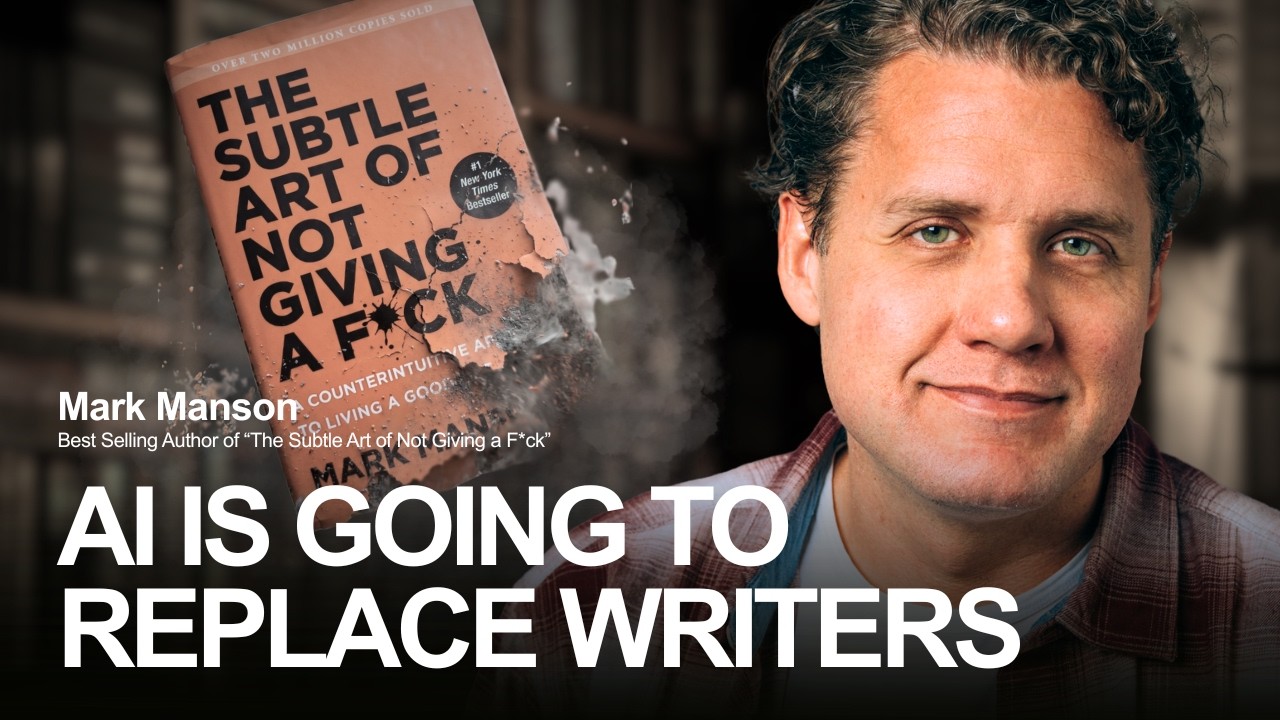
Mark Manson: AI is a Better Writer Than You But Here’s What it Can’t Replace
Jul 16, 2026 · 44:11
Mark Manson, author of *The Subtle Art of Not Giving a F*ck* (20 million copies, 70+ languages), argues AI will render most human self-help obsolete because it's all language, and he's building an AI app called Purpose. He claims nonfiction book sales are down 20–30% due to AI, not podcasts, and that AI will write as well as him but cannot replace his unique blend of traits. Manson shares how he uses AI for research and business coaching, and outlines an AI-proof nonfiction book requires novel concepts, creative teaching, and trust-based verticals like dating and business. He reflects on how his book's message has shifted over a decade, noting people now over-invest in identities. His advice: find the 0.1% edge case where your specific experiences overlap, because that's what AI cannot replicate.

How Many $10 Billion Startups Will There Be? | Eric Hippeau
May 13, 2026 · 57:21
Eric Hippeau, co-founder of Lerer Hippeau, argues that while AI is transforming tech faster than ever, startups must avoid being mere wrappers around foundational models, as they can be instantly disrupted. He explains that physical AI, combining hardware and AI in areas like robotics and defense, offers more defensible opportunities. Hippeau warns that the startup market is disconnected, with inflated seed valuations assuming many will reach $10B, but historically there's no market for hundreds of such companies. He discusses healthcare, where AI-driven diagnostics could make primary care nearly free, but political will is needed to overcome entrenched systems. On media, he shares lessons from building Huffington Post—keeping stories live and separating opinion—and predicts that AI could restore trust by providing verifiable facts. Hippeau also reveals he has rebuilt his firm's workflow around Anthropic's Claude, cites AR glasses as underrated, and notes that solo GPs must build teams to succeed.

Will AI Models Ever Compensate Creators? Tony Stubblebine (Medium CEO)
May 6, 2026 · 53:35
Tony Stubblebine, CEO of Medium, argues the creator economy is ending as AI slop floods public channels, but a writing renaissance is emerging where authentic expertise and private communities hold value. He details Medium's turnaround from losing $2.5M per month and $37M in debt to profitability, achieved by restructuring investor relationships and refocusing on human-written content. Stubblebine warns that AI companies like OpenAI created a 'prisoner's dilemma' by scraping content without compensation, pushing high-quality writing into walled gardens. He introduces Medium's new AI-assisted writing app TK and private blogging groups as responses to the era. The episode explores how creators must diversify revenue streams and reinvent themselves, while per-inference pricing standards like RSL slowly develop.

Yahoo Is Striking Back | CEO Shares The Latest
Apr 7, 2026 · 53:50
Yahoo CEO Jim Lanzone and SVP Eric Feng explain how Yahoo is striking back with AI-powered products like Scout and MyScout, leveraging its 700 million users and proprietary data to differentiate from generic chatbots. After being taken private by Apollo in 2021, Yahoo sold off non-core assets and restructured into GM-led units, cutting headcount by 50% while remaining profitable. The company owns its AI tech, using 30 years of search history and unique knowledge graphs to deliver accurate, citation-rich answers that send traffic to publishers, unlike other AI engines. They argue this approach is possible because Yahoo dominates categories like finance (#1) and sports (#2), each with 100M+ monthly users, and that AI is causing a seismic shift in search behavior (Google's lowest market share in a decade). The duo emphasizes that domain expertise now matters more than pure technical skills, and they are planning agentic features that move from information to action, such as booking trips or setting fantasy lineups, to increase user touchpoints from once a day to multiple times an hour.

The Harsh Truth About Building a Startup in the AI Era | Anish Acharya
Nov 23, 2025 · 51:12
Anish Acharya, General Partner at a16z, argues the AI era has reopened consumer tech's biggest window since mobile, with consumers paying $200–$250 monthly for products like Gemini Ultra and ChatGPT. He warns founders against traps like thinking they're too late, noting AI code and legal will become entire industries with dozens of winners. Voice AI is an enterprise insertion point where agents already outperform humans at negotiation, while the next social platform will revolve around software creation rather than content. He dismisses the AI wrapper risk because multi-model products and fine-tuned data give startups defensibility, and advises founders to raise 24-month rounds focused on product, not marketing. Acharya also predicts 2026 will bring new distribution channels via OpenAI's Apps SDK, Apple's mini apps, and group chat discovery.

How He Built This Full App Using ONLY 3 prompts | Colin Matthews
Oct 15, 2025 · 46:40
Colin Matthews, a vibe coding instructor, demonstrates how to build full-stack apps, convert Figma designs, and clone live websites using tools like Lovable, Bolt, Replit, Magic Patterns, and Alloy, arguing that the real challenge is distribution, not coding. He shows that bolt, Replit, and Lovable all generate similar results using the same underlying LLMs, with differences in UI and cost—Bolt costing about $5 for a virtual fitting room app. For Figma-to-code, Magic Patterns offers better code quality while Figma Make has superior visual fidelity but messy code. Website cloning via Chrome extensions like Alloy takes 5–10 minutes per page but currently lacks multi-page support. Matthews emphasizes that 90% of the work is easy, but the remaining 10% requires debugging skills, and advises aspiring builders to adopt a distribution-first approach—citing his own Wix extension that got 8,000 users with no marketing—rather than just focusing on product.

How To Actually Vibe Code
Aug 8, 2025 · 59:19
Billy Howell demonstrates how to vibe-code a directory website for barbecue restaurants using AI tools like Replit, Lovable, and V0, taking the idea from a product requirements document to a functional prototype in under an hour. He explains that niche directories can be built in a weekend, monetized through ads or affiliate partnerships, and eventually sold via platforms like MicroAcquire. Beyond directories, Howell discusses three trends: employees using AI to build and sell custom software to their employers, unlocking nascent demand as every business gains access to tailored tools; and AI receptionists for local service businesses, citing a personal experience where he didn't realize he was talking to an AI until 20 seconds into the call. He recommends starting with a specific niche (e.g., HVAC or gyms) and using tools like Replit, Cursor, LiveKit, or VAPI to build custom solutions.
Powered by PodHood