
Cursor
ProductA product discussed on NEW ECONOMIES.
9 episodes

a16z Partner: Hollywood Is Secretly Replacing Films With AI
Jul 23, 2026 · 50:27
Justine Moore, a16z partner and early backer of ElevenLabs, explains why AI microdramas — short, vertical soap operas — are becoming the fastest-growing entertainment format, with China's microdrama market now larger than its domestic box office. She argues model quality has reached 90-95% of filming, making it cheaper and faster, and professional storytellers are now using it to create compelling narratives. Amazon and Netflix have announced programs for fully AI-generated animations. ElevenLabs, which she backed at Series A, has crossed $500M in ARR. She highlights consumer agents like Town that automate tasks such as warm intros and expense forwarding, and sees the biggest opportunity in serving less technically sophisticated users and vertical industries like marketing and architecture.
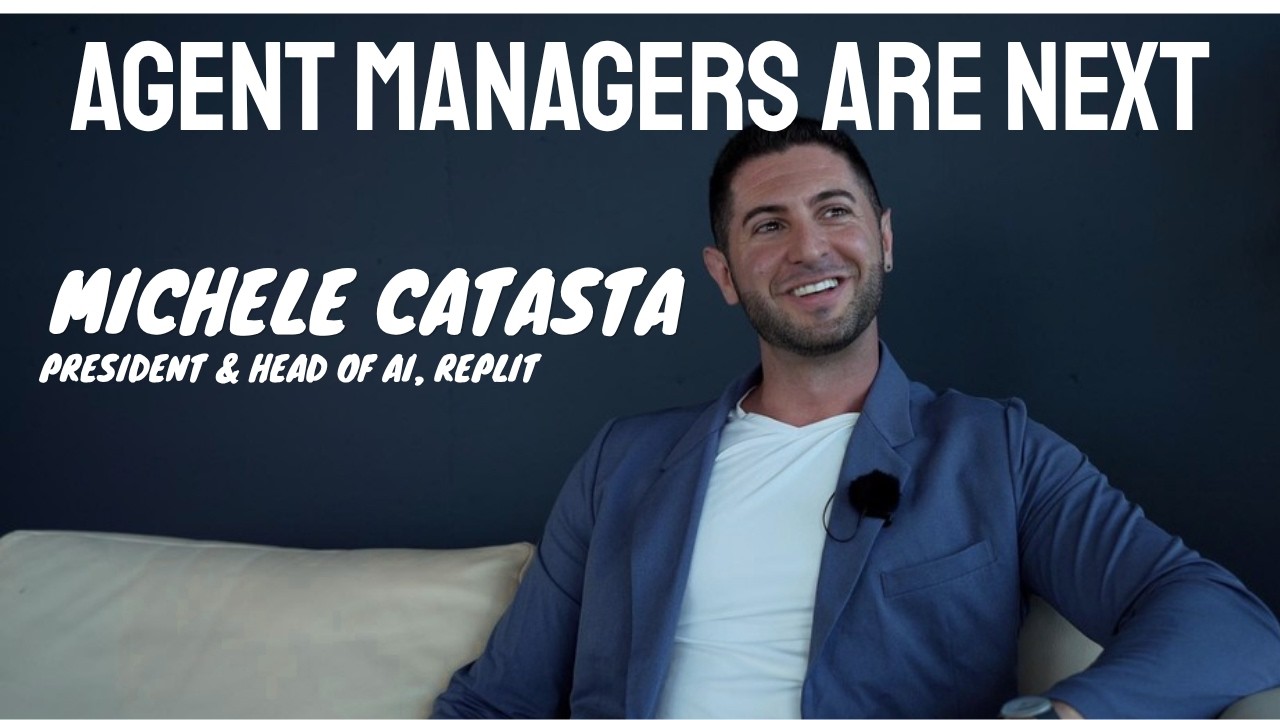
Replit's President & Head of AI | Michele Catasta
Jun 16, 2026 · 49:58
Replit's President Michele Catasta explains how the company evolved from a 15-year-old open source side project to powering 85% of Fortune 500 by launching the first vibe coding agent in 2024, before the term existed. He describes the initial rough launch that attracted candid feedback, the scramble to build an enterprise sales team when IT departments knocked, and the belief that the coding problem is nearly solved—shifting focus to integrations. Catasta argues that technical moats are less important than execution moats built from a decade of battle scars and user trust. He predicts 2026 will be the year of 'agent managers,' where every role involves managing multiple AI agents rather than single-threaded work. The Visa partnership exemplifies Replit's strategy of providing reliable building blocks for monetization, allowing vibe coders to add payments with a single prompt.

Inside Mercury's Founding Story | Co-Founder & CEO Immad Akhund
Jun 9, 2026 · 50:11
Immad Akhund, co-founder and CEO of Mercury, explains how the startup bank captured one in three U.S. startups by launching with product-market fit from day one—a million-dollar deposit arrived within four days from a stranger—and why legacy banks never stood a chance due to their focus on loans, expensive branch structures, and IT rather than engineering teams. Mercury raised $200M at a $5.2B valuation without needing the money, driven by 2.5x growth in Q1 2024 from AI-fueled entrepreneurship. Akhund details building trust as a moat, using small teams and Amazon's working-backwards process to launch AI features like Mercury Insights and Mercury Command, which let users run banking tasks inside AI tools. He dropped all one-on-ones after learning from Jensen Huang's 60 direct reports, favors optimistic curiosity, and angel-invests 250K checks in contrarian areas like space and deep tech.
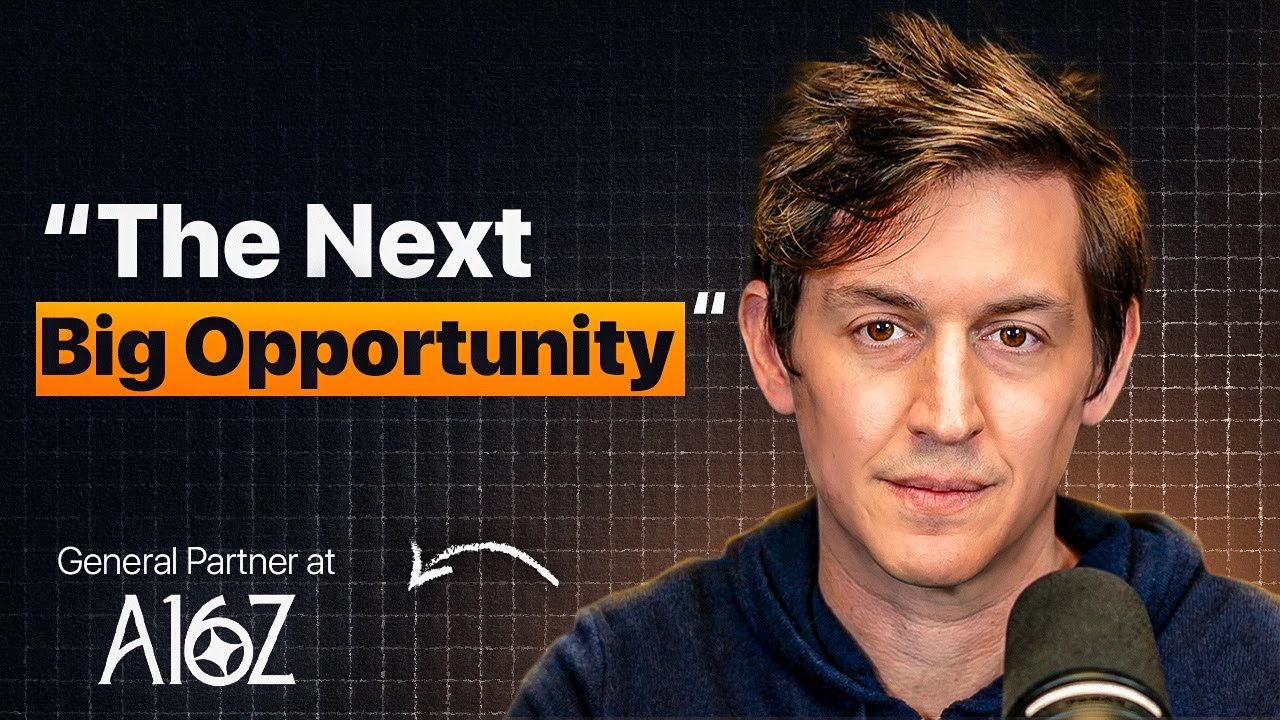
A16Z Partner: Why "Just Capital" Is Not Enough Anymore (The Firm of 2030) | David Haber
Jan 25, 2026 · 56:58
David Haber, a16z general partner, argues most venture investors run funds but few build firms, and explains how a16z operates as a firm with compounding competitive advantage. The firm reinvests fees into a 600-person platform giving founders distribution, credibility, and leverage. Haber shares his founder story: Bond Street raised $900M in debt, sold to Goldman Sachs, teaching him inside a 40,000-person organization. On AI, he says software becomes labor, expanding TAM beyond IT spend—portfolio company Salient's voice agents achieve 50% better collection rates. He also highlights a16z's decentralized model with no single CIO, where specialist partners run divisions, making the firm more resilient than traditional funds.

The Harsh Truth About Building a Startup in the AI Era | Anish Acharya
Nov 23, 2025 · 51:12
Anish Acharya, General Partner at a16z, argues the AI era has reopened consumer tech's biggest window since mobile, with consumers paying $200–$250 monthly for products like Gemini Ultra and ChatGPT. He warns founders against traps like thinking they're too late, noting AI code and legal will become entire industries with dozens of winners. Voice AI is an enterprise insertion point where agents already outperform humans at negotiation, while the next social platform will revolve around software creation rather than content. He dismisses the AI wrapper risk because multi-model products and fine-tuned data give startups defensibility, and advises founders to raise 24-month rounds focused on product, not marketing. Acharya also predicts 2026 will bring new distribution channels via OpenAI's Apps SDK, Apple's mini apps, and group chat discovery.

How He Built This Full App Using ONLY 3 prompts | Colin Matthews
Oct 15, 2025 · 46:40
Colin Matthews, a vibe coding instructor, demonstrates how to build full-stack apps, convert Figma designs, and clone live websites using tools like Lovable, Bolt, Replit, Magic Patterns, and Alloy, arguing that the real challenge is distribution, not coding. He shows that bolt, Replit, and Lovable all generate similar results using the same underlying LLMs, with differences in UI and cost—Bolt costing about $5 for a virtual fitting room app. For Figma-to-code, Magic Patterns offers better code quality while Figma Make has superior visual fidelity but messy code. Website cloning via Chrome extensions like Alloy takes 5–10 minutes per page but currently lacks multi-page support. Matthews emphasizes that 90% of the work is easy, but the remaining 10% requires debugging skills, and advises aspiring builders to adopt a distribution-first approach—citing his own Wix extension that got 8,000 users with no marketing—rather than just focusing on product.

300 Million Downloads (Matt Rouif, Photoroom)
Aug 16, 2025 · 48:07
Matt Rouif, co-founder of Photoroom, explains how the photo editing app grew from a two-week prototype in 2019 to 300 million downloads and $20 million in annual revenue on only $2 million raised, becoming the largest AI image editing tool globally. He details early tactics like localizing in 10 languages and conducting customer interviews at McDonald's. COVID accelerated adoption as sellers moved online, and Photoroom's focus on trust—avoiding AI hallucinations in product shots—set it apart for e-commerce. Rouif shares plans for a video editing beta and personalized advertising at scale, where infinite marketing assets are tailored per user. He identifies trends: specialized AI models for mobile speed and trust, AI video maturing in 2025-2026, and personalized advertising that creates unique imagery for each segment.

How To Actually Vibe Code
Aug 8, 2025 · 59:19
Billy Howell demonstrates how to vibe-code a directory website for barbecue restaurants using AI tools like Replit, Lovable, and V0, taking the idea from a product requirements document to a functional prototype in under an hour. He explains that niche directories can be built in a weekend, monetized through ads or affiliate partnerships, and eventually sold via platforms like MicroAcquire. Beyond directories, Howell discusses three trends: employees using AI to build and sell custom software to their employers, unlocking nascent demand as every business gains access to tailored tools; and AI receptionists for local service businesses, citing a personal experience where he didn't realize he was talking to an AI until 20 seconds into the call. He recommends starting with a specific niche (e.g., HVAC or gyms) and using tools like Replit, Cursor, LiveKit, or VAPI to build custom solutions.
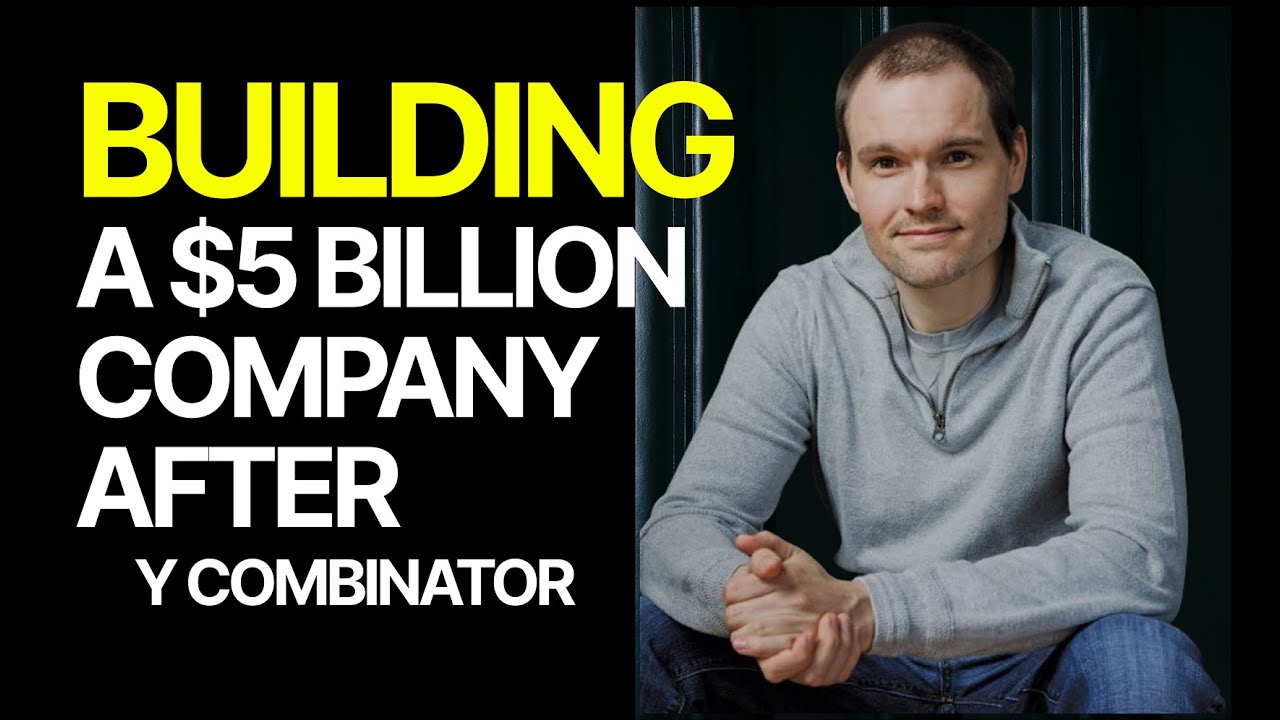
The Founding Story Of Zapier (Wade Foster)
Jul 24, 2025 · 51:33
Wade Foster, co-founder of Zapier, recounts the company's 2011 founding as an integration tool born from a forum thread and bootstrapped to scale without raising beyond $1.3 million. He explains how early growth came from answering forum posts with a prototype that converted at 50% despite being poorly designed, and how the company maintained a 'don't hire till it hurts' philosophy. Foster details the decision to avoid VC because customer acquisition costs were low and the business was profitable within a year, achieving breakeven with only tiny monthly losses. He shares two Paul Graham lessons from Y Combinator: focus only on writing code and talking to customers, and target 10% week-over-week growth, which the company sustained for years. On AI, Foster notes that AI is Zapier's fastest-growing category at nearly 300% year-over-year, and the company now offers agents built by non-technical users through natural-language workflows. He argues that seat-based pricing is dying and predicts a shift to usage-based models, while identifying the biggest AI opportunity in legacy industries like healthcare that work with unstructured data.
Powered by PodHood