
XAI
CompanyA company discussed on NEW ECONOMIES.
2 episodes

How Many $10 Billion Startups Will There Be? | Eric Hippeau
May 13, 2026 · 57:21
Eric Hippeau, co-founder of Lerer Hippeau, argues that while AI is transforming tech faster than ever, startups must avoid being mere wrappers around foundational models, as they can be instantly disrupted. He explains that physical AI, combining hardware and AI in areas like robotics and defense, offers more defensible opportunities. Hippeau warns that the startup market is disconnected, with inflated seed valuations assuming many will reach $10B, but historically there's no market for hundreds of such companies. He discusses healthcare, where AI-driven diagnostics could make primary care nearly free, but political will is needed to overcome entrenched systems. On media, he shares lessons from building Huffington Post—keeping stories live and separating opinion—and predicts that AI could restore trust by providing verifiable facts. Hippeau also reveals he has rebuilt his firm's workflow around Anthropic's Claude, cites AR glasses as underrated, and notes that solo GPs must build teams to succeed.
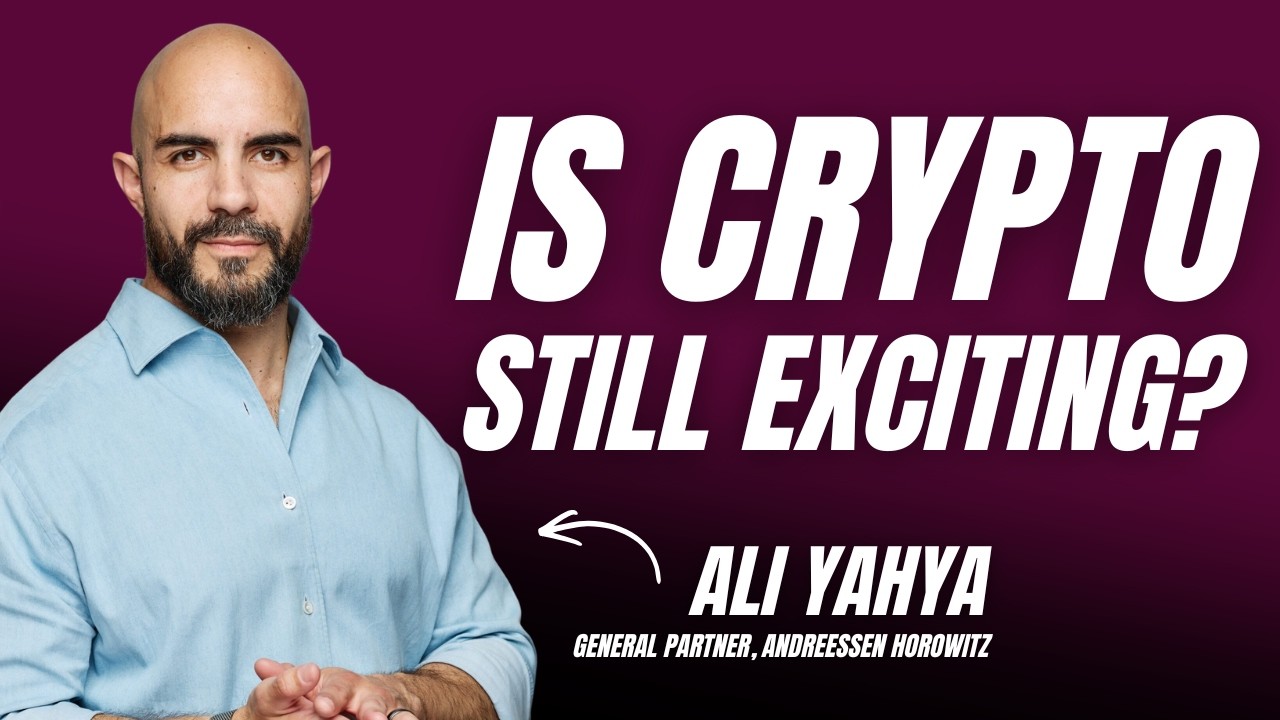
Why Andreessen Horowitz Is Still Betting Big On Crypto
Apr 22, 2026 · 50:25
Ali Yahya, general partner at Andreessen Horowitz (a16z), explains why AI and crypto are converging faster than predicted, with privacy emerging as a key defensive moat for crypto startups. He defines AGI as the point when an agent can be fully economically independent and outlines five stages of autonomous commerce, from automated payments to agent-to-agent transactions. Yahya is skeptical about AI agents trading for consumers—since everyone using ChatGPT eliminates alpha—but sees potential for professionals with proprietary data. He notes that a16z's 70-person platform team provides legal, research, and go-to-market support, and that the cost of entry has collapsed, letting founders test ideas with smaller teams before raising capital. He also highlights prediction markets, now legal in the US, as a growing category and recommends robotics as the next frontier, calling physical intelligence a 10–15 year arc offering time for newcomers to enter.
Powered by PodHood