
Waymo
CompanyA company discussed on NEW ECONOMIES.
5 episodes

Replit's President & Head of AI | Michele Catasta
Jun 16, 2026 · 49:58
Replit's President Michele Catasta explains how the company evolved from a 15-year-old open source side project to powering 85% of Fortune 500 by launching the first vibe coding agent in 2024, before the term existed. He describes the initial rough launch that attracted candid feedback, the scramble to build an enterprise sales team when IT departments knocked, and the belief that the coding problem is nearly solved—shifting focus to integrations. Catasta argues that technical moats are less important than execution moats built from a decade of battle scars and user trust. He predicts 2026 will be the year of 'agent managers,' where every role involves managing multiple AI agents rather than single-threaded work. The Visa partnership exemplifies Replit's strategy of providing reliable building blocks for monetization, allowing vibe coders to add payments with a single prompt.

Why Andreessen Horowitz Is Still Betting Big On Crypto
Apr 22, 2026 · 50:25
Ali Yahya, general partner at Andreessen Horowitz (a16z), explains why AI and crypto are converging faster than predicted, with privacy emerging as a key defensive moat for crypto startups. He defines AGI as the point when an agent can be fully economically independent and outlines five stages of autonomous commerce, from automated payments to agent-to-agent transactions. Yahya is skeptical about AI agents trading for consumers—since everyone using ChatGPT eliminates alpha—but sees potential for professionals with proprietary data. He notes that a16z's 70-person platform team provides legal, research, and go-to-market support, and that the cost of entry has collapsed, letting founders test ideas with smaller teams before raising capital. He also highlights prediction markets, now legal in the US, as a growing category and recommends robotics as the next frontier, calling physical intelligence a 10–15 year arc offering time for newcomers to enter.
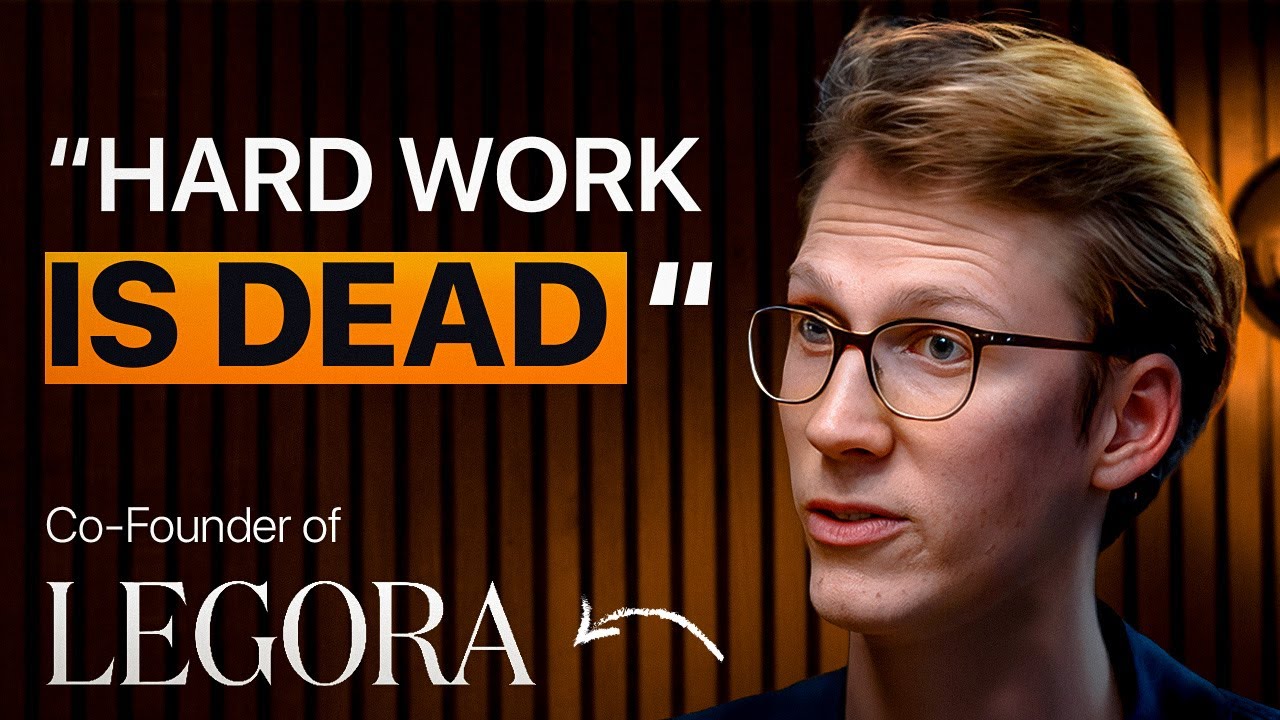
He Built A $1.8B AI Company With No Experience | Max Junestrand
Dec 14, 2025 · 52:02
Max Junestrand, CEO of legal AI company Legora, explains how AI is rewiring the legal profession, arguing that not building in AI is the biggest career risk. Legora, which went through YC W25 and has raised $260M, doubles ARR every quarter by embedding with law firms to solve real problems. Junestrand details how AI adds a fourth step to the lawyer career ladder—junior associate, senior associate, partner, AI—pushing junior lawyers to focus on intelligence and client skills earlier. He describes Legora's shift from chat to large-scale document review and Word-native drafting, and predicts a move from billable hours to outcome-based pricing as AI automates more work. Junestrand also shares his fundraising approach: build a great business and investors come to you, with Legora's Series B closing in a week and Series C in a week and a half.

Inside the $11M YC Startups That Took Over 2025
Oct 19, 2025 · 1:27:39
This episode profiles six YC Summer 25 startups: Frizzle (AI grading for math teachers, saving 10+ hours/week with 98.9% accuracy), Floot (vibe-coding tool for non-coders, 20,000 users in three months, acquired via Reddit competitor subreddits), Sagekit (chat-based automation platform replacing Zapier, building integrations at 5–10 per week, targeting solopreneurs and SMBs), April (voice AI executive assistant for email and calendar, priced at $15/month, initially launched without free trial then corrected), Cacao (dollar app for Brazil using stablecoins, moving hundreds of thousands in volume, focused on remote workers and freelancers), and Flywheel (retrofit remote control for excavators to improve safety, with two Singapore and three US customers, aiming to reduce ~1,000 annual US construction deaths). Each founder shares early mistakes—Frizzle’s underestimating K-12 sales cycles, Floot’s free pricing delaying feedback, April’s no-trial launch, Cacao’s need for regulatory navigation, and Flywheel’s productization challenges—and explains their go-to-market strategies.

The Youngest Female BILLIONAIRE Told Us THIS
Sep 7, 2025 · 49:02
Lucy Guo, co-founder of Scale AI and founder of Passes, shares her journey from high-school entrepreneur to youngest self-made female billionaire and her vision for the creator economy. She explains why she pivoted from food delivery and healthcare apps to Scale AI, emphasizing the importance of early co-founder communication to avoid conflict. At Passes, she outlines a 0% take rate on marketplace products and a 10% blended fee, arguing creators must own their audiences for sustainable businesses. She identifies AI's potential for digital twins and script generation but fears deepfake misuse. Guo also predicts self-driving cars will enable suburban living and advises founders to invest in top engineers, citing her early bet on Ramp.
Powered by PodHood